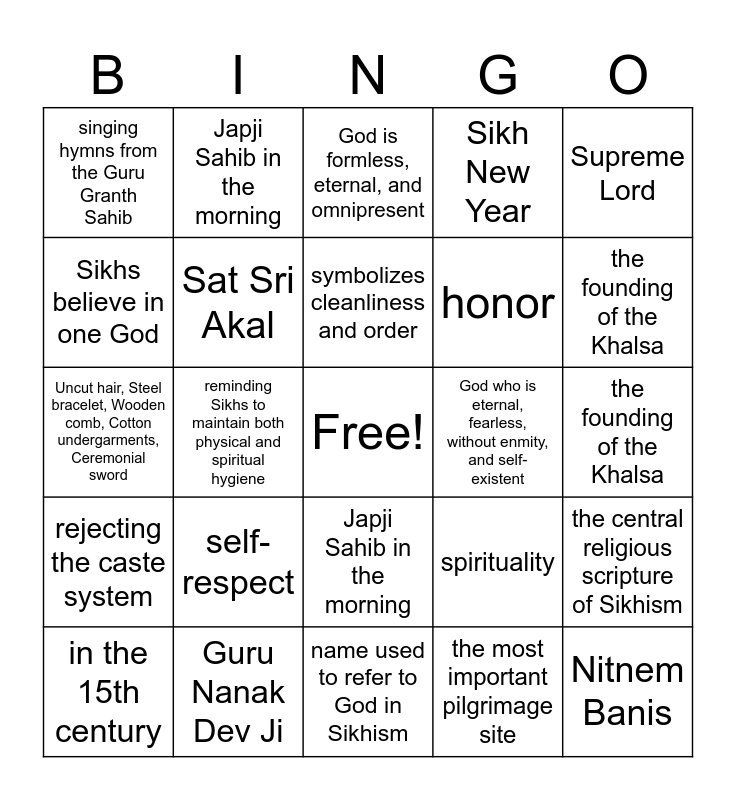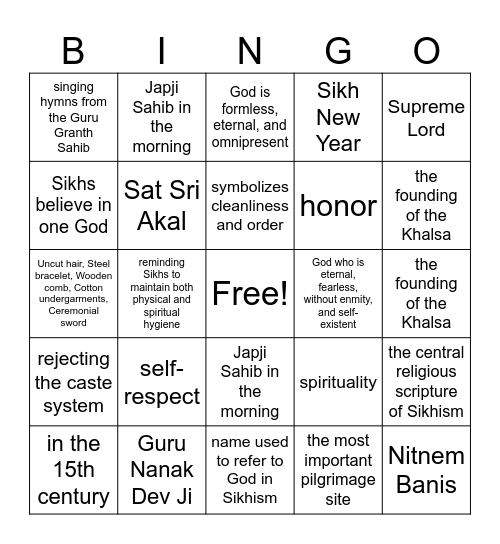
This bingo card has a free space and 59 words: One God, Guru Nanak Dev Ji, The Guru Granth Sahib, rejecting the caste system, the most important pilgrimage site, Kesh, Kara, Kanga, Kachera, Kirpan, Sat Sri Akal, gender equality, honor, Sikhs believe in karma and rebirth, Sikh New Year, through honest living, Sikhs believe in one God, Wonderful Teacher, the central religious scripture of Sikhism, singing hymns from the Guru Granth Sahib, Nitnem Banis, Supreme Lord, Seizer (of sin), symbolizes cleanliness and order, God who is eternal, fearless, without enmity, and self-existent, God is formless, eternal, and omnipresent, in the 15th century, the central religious scripture of Sikhism, equality among all people, symbolizing universal brotherhood and equality, Waheguru ji ka Khalsa, self-respect, the founding of the Khalsa, selfless service, God can be experienced directly through meditation and prayer., the most revered name for God in Sikhism, considered the eternal living Guru, creating a spiritual atmosphere, Japji Sahib in the morning, name used to refer to God in Sikhism, refer to God's ability to remove sins and grant liberation., reminding Sikhs to maintain both physical and spiritual hygiene, symbolizing universal brotherhood and equality, Uncut hair, Steel bracelet, Wooden comb, Cotton undergarments, Ceremonial sword, Waheguru ji ka Khalsa, self-respect, the founding of the Khalsa, selfless service, God can be experienced directly through meditation and prayer, the most revered name for God in Sikhism, considered the eternal living Guru, creating a spiritual atmosphere, Japji Sahib in the morning, name used to refer to God in Sikhism, refer to God's ability to remove sins and grant liberation., reminding Sikhs to maintain both physical and spiritual hygiene, the divine qualities that Sikhs want to embody in their lives, in the Punjab region of India, Waheguru Ji Ki Fateh, spirituality, similar to New Year celebrations in other cultures, congregation collectively remember and praise God and Japji Sahib in the morning.
⚠ This card has duplicate items: the central religious scripture of Sikhism (2), symbolizing universal brotherhood and equality (2), Waheguru ji ka Khalsa (2), self-respect (2), the founding of the Khalsa (2), selfless service (2), the most revered name for God in Sikhism (2), considered the eternal living Guru (2), creating a spiritual atmosphere (2), Japji Sahib in the morning (3), name used to refer to God in Sikhism (2), refer to God's ability to remove sins and grant liberation. (2), reminding Sikhs to maintain both physical and spiritual hygiene (2)
English | Sikhism | Gurmat Camp 2024 | Gurmat Camp 2024 | Sikhism
Share this URL with your players:
For more control of your online game, create a clone of this card first.
Learn how to conduct a bingo game.
With players vying for a you'll have to call about __ items before someone wins. There's a __% chance that a lucky player would win after calling __ items.
Tip: If you want your game to last longer (on average), add more unique words/images to it.