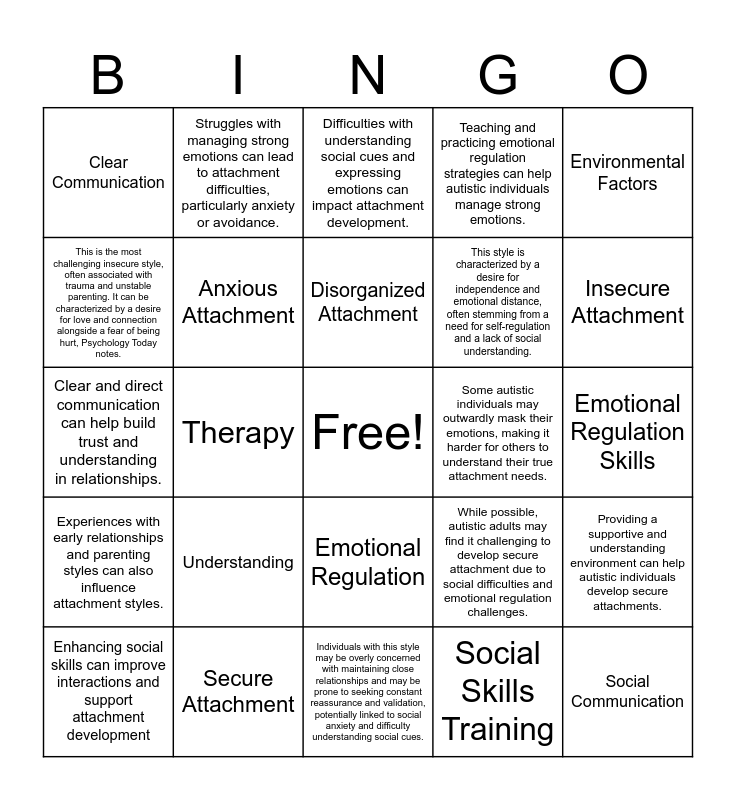
This bingo card has a free space and 27 words: While possible, autistic adults may find it challenging to develop secure attachment due to social difficulties and emotional regulation challenges., Autistic individuals may be more prone to insecure attachment styles, particularly avoidant and anxious, due to challenges in social interaction and emotional processing., This style is characterized by a desire for independence and emotional distance, often stemming from a need for self-regulation and a lack of social understanding., Individuals with this style may be overly concerned with maintaining close relationships and may be prone to seeking constant reassurance and validation, potentially linked to social anxiety and difficulty understanding social cues., This is the most challenging insecure style, often associated with trauma and unstable parenting. It can be characterized by a desire for love and connection alongside a fear of being hurt, Psychology Today notes., Difficulties with understanding social cues and expressing emotions can impact attachment development., Struggles with managing strong emotions can lead to attachment difficulties, particularly anxiety or avoidance., Experiences with early relationships and parenting styles can also influence attachment styles., Some autistic individuals may outwardly mask their emotions, making it harder for others to understand their true attachment needs., Providing a supportive and understanding environment can help autistic individuals develop secure attachments., Clear and direct communication can help build trust and understanding in relationships., Teaching and practicing emotional regulation strategies can help autistic individuals manage strong emotions., Enhancing social skills can improve interactions and support attachment development, Secure Attachment, Insecure Attachment, Avoidant Attachment, Anxious Attachment, Disorganized Attachment, Understanding, Clear Communication, Emotional Regulation Skills, Social Skills Training, Therapy, Social Communication, Emotional Regulation, Environmental Factors and Masking.
Social & Emotional Development (Infant & Toddlers) | MH Attachment Bingo | Child Development Bingo | Emotional-Social Development BINGO | Emotional-Social Development BINGO
Share this URL with your players:
For more control of your online game, create a clone of this card first.
Learn how to conduct a bingo game.
With players vying for a you'll have to call about __ items before someone wins. There's a __% chance that a lucky player would win after calling __ items.
Tip: If you want your game to last longer (on average), add more unique words/images to it.