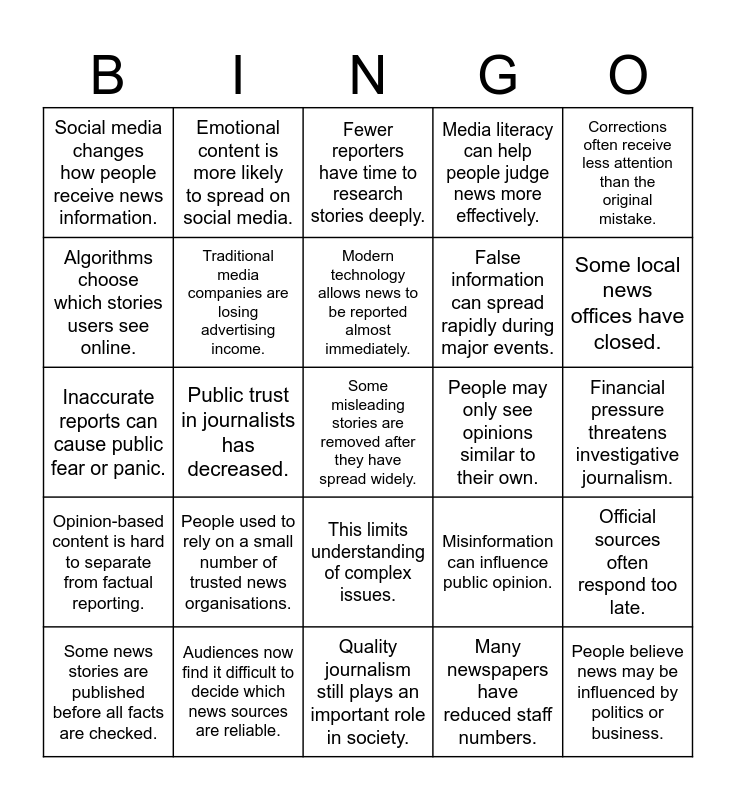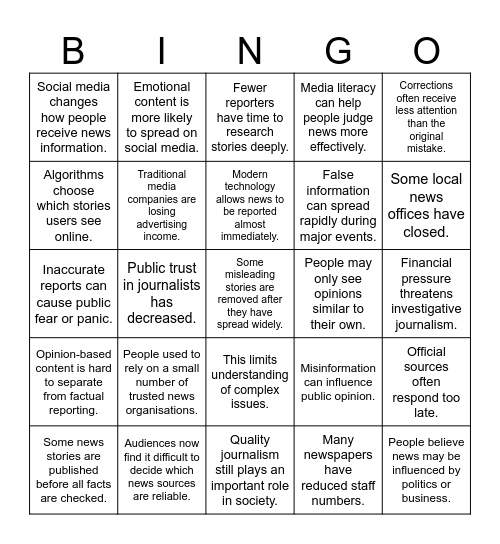
This bingo card has a free space and 24 words: People used to rely on a small number of trusted news organisations., Audiences now find it difficult to decide which news sources are reliable., Modern technology allows news to be reported almost immediately., Some news stories are published before all facts are checked., Corrections often receive less attention than the original mistake., Social media changes how people receive news information., Algorithms choose which stories users see online., Emotional content is more likely to spread on social media., People may only see opinions similar to their own., This limits understanding of complex issues., False information can spread rapidly during major events., Inaccurate reports can cause public fear or panic., Misinformation can influence public opinion., Official sources often respond too late., Traditional media companies are losing advertising income., Many newspapers have reduced staff numbers., Financial pressure threatens investigative journalism., Fewer reporters have time to research stories deeply., Some local news offices have closed., Public trust in journalists has decreased., People believe news may be influenced by politics or business., Opinion-based content is hard to separate from factual reporting., Media literacy can help people judge news more effectively. and Quality journalism still plays an important role in society..
media literacy | Media Literacy | Media Literacy | media literacy | Media and Globalization
Share this URL with your players:
For more control of your online game, create a clone of this card first.
Learn how to conduct a bingo game.
With players vying for a you'll have to call about __ items before someone wins. There's a __% chance that a lucky player would win after calling __ items.
Tip: If you want your game to last longer (on average), add more unique words/images to it.