VelocitySpeedanddirectionNewtonThe SIunit forforceNetForceThe sum ofof all forcesacting onan objectNormalForceSupportforce from asurfacepushing upon an objectFrictionA force thatopposes motionbetween twosurfacestouching eachotherinverselyproportionalWhen onevalueincreases,the otherdecreasesForceA pushor pull onan objectAction-ReactionPairTwo equaland oppositeforcesbetweenobjectsNewton's1st LawAn object willstay at rest orin motionunless a forceacts on it.addUsed to findnet force whenforces act inthe samedirectionBalancedEqual andoppositeforces causingno change inmotionsubtractUsed to find netforces whenforces act in theoppositedirectionNewton's3rd LawFor everyaction force,there is anequal andoppositereaction forceF=maTheformula forNewton's2nd lawUnbalancedUnequal forcesacting on anobject, causinga change inmotionThe SI unitforaccelerationkgThe SIunit formassMassTheamount ofmatter inan objectAccelerationChangein velocityover timedirectlyproportionalWhen onevalueincreases,the otherincreasesGravityAn attractiveforce thatpulls objectstoward eachotherWeightThe forceof gravityacting onan objectInertiaThe tendencyof objects toresistchanges inmotionNewton's2nd LawThe accelerationis inverselyproportional tomass and directlyproportional tonet force appliedVelocitySpeedanddirectionNewtonThe SIunit forforceNetForceThe sum ofof all forcesacting onan objectNormalForceSupportforce from asurfacepushing upon an objectFrictionA force thatopposes motionbetween twosurfacestouching eachotherinverselyproportionalWhen onevalueincreases,the otherdecreasesForceA pushor pull onan objectAction-ReactionPairTwo equaland oppositeforcesbetweenobjectsNewton's1st LawAn object willstay at rest orin motionunless a forceacts on it.addUsed to findnet force whenforces act inthe samedirectionBalancedEqual andoppositeforces causingno change inmotionsubtractUsed to find netforces whenforces act in theoppositedirectionNewton's3rd LawFor everyaction force,there is anequal andoppositereaction forceF=maTheformula forNewton's2nd lawUnbalancedUnequal forcesacting on anobject, causinga change inmotionThe SI unitforaccelerationkgThe SIunit formassMassTheamount ofmatter inan objectAccelerationChangein velocityover timedirectlyproportionalWhen onevalueincreases,the otherincreasesGravityAn attractiveforce thatpulls objectstoward eachotherWeightThe forceof gravityacting onan objectInertiaThe tendencyof objects toresistchanges inmotionNewton's2nd LawThe accelerationis inverselyproportional tomass and directlyproportional tonet force applied

Newton's Laws Bingo - Call List

(Print) Use this randomly generated list as your call list when playing the game. There is no need to say the BINGO column name. Place some kind of mark (like an X, a checkmark, a dot, tally mark, etc) on each cell as you announce it, to keep track. You can also cut out each item, place them in a bag and pull words from the bag.


1
2
3
4
5
6
7
8
9
10
11
12
13
14
15
16
17
18
19
20
21
22
23
24
  1. Speed and direction
    Velocity
  2. The SI unit for force
    Newton
  3. The sum of of all forces acting on an object
    Net Force
  4. Support force from a surface pushing up on an object
    Normal Force
  5. A force that opposes motion between two surfaces touching each other
    Friction
  6. When one value increases, the other decreases
    inversely proportional
  7. A push or pull on an object
    Force
  8. Two equal and opposite forces between objects
    Action-Reaction Pair
  9. An object will stay at rest or in motion unless a force acts on it.
    Newton's 1st Law
  10. Used to find net force when forces act in the same direction
    add
  11. Equal and opposite forces causing no change in motion
    Balanced
  12. Used to find net forces when forces act in the opposite direction
    subtract
  13. For every action force, there is an equal and opposite reaction force
    Newton's 3rd Law
  14. The formula for Newton's 2nd law
    F=ma
  15. Unequal forces acting on an object, causing a change in motion
    Unbalanced

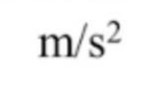
  16. The SI unit for acceleration
  17. The SI unit for mass
    kg
  18. The amount of matter in an object
    Mass
  19. Change in velocity over time
    Acceleration
  20. When one value increases, the other increases
    directly proportional
  21. An attractive force that pulls objects toward each other
    Gravity
  22. The force of gravity acting on an object
    Weight
  23. The tendency of objects to resist changes in motion
    Inertia
  24. The acceleration is inversely proportional to mass and directly proportional to net force applied
    Newton's 2nd Law