Kyrie, Gloria,Credo,Sanctus,Agnus DeiThis is a list ofthe 5 musicalparts of theMedievalCatholic MassAnillustration ofGuillaumede MachautThe BubonicPlague(BlackDeath)Publichealthevent in1350sMelismaDefinition:multiplepitches sungto one syllableof textPope,clergy, &monksThe peoplewho lived andworked inchurches andmonasteriesMass ofNostreDameComposed byMachaut andincluded all 5Massmovements inone pieceMusickaThe Greekword formusic,poetry, andtelling historyPolyphonyDefinition: musicaltexture that hastwo or moreindependent andimportant melodiclinesLatinChants andhymns forworshipwere in thislanguageTheRenaissanceEraThe eraafter theMiddleAgesRefrainDefinition: arepeating musicalsection, generallyalso with repeatedtext; sometimescalleda “chorus”Kings,dukes,lords, &noblesPeople wholived in courtsand hiredmusicians forentertainmentTheRomanEmpireThecivilizationbefore theMiddle Ages500 to1450The yearsof theMiddleAgesAcapellaDefinition: vocalmusic withoutinstrumentalaccompanimentSyllabicDefinition:music in whicheach syllable ofa text is set toone musicalnoteHildegardvonBingenA Germanabbess whowroteGregorianchantsMusictransitionsfrommonophonicto polyphonicMajormusicalchange ofthe 13thcenturyGuidod'ArezzoHe developeda system ofmusicnotation in the11th CenturyA paintingofHildegardvon BingenKingAlfonsothe WiseHe hiredmusicians towrite over400songs aboutThe Virgin MaryAgnus Deifrom theNostreDame MassListeningexample:Agnus Dei fromthe NostreDame MassGuillaumedeMachautHe was famousfor writing bothsacred Massesand secularlove songsStrophicDefinition:musical form inwhich all versesare sung to thesame musicAveGenerosaListeningExample:AveGenerosaHymnDefinition:religiouspolyphonicsong usingstrophic formA French songabout courtlylove thatalternatesrefrain and 3versesDescriptionof Dame, àvous sansretollirBuilding ofthe NotreDameCathedral inParisMajorarchitecturalachievementin FranceDroneDefinition:sustained pitchoften found inmusic of themiddle ages orearlierand in folk musicChantDefinition: text setto a monophonicmelody, no writtenrhythms,typically used inreligious worshipCourtlyLoveDefinition: love fora beloved, withoutany concern forwhether or not thelove will bereturned,FreeorganumOne type ofpolyphony where 1person sang a chantlike a bassline andthe other personimprovised a higher,more complicatedmelodySong of Mary,No. 181: “TheVirgin will aidthose who mostlove her”Listeningexample: “TheVirgin will aidthose who mostlove her”CadenceDefinition: theending of amusical phraseproviding asense ofclosure,Conjunctmelody, narrowrange, andrepeatingrefrains(chorus)What domedieval lovesongs andtoday's popmusic have incommon?This is apicture of theCathedral ofNotre Dame“Lady, to youwithout reserveI give my heart"aka Dame, àvous sansretollirListeningExample:Dame, àvous sansretollirManuscriptfrom Cantigasde Santa Maria,people playingdrums and fifesMatins,Lauds,andVespersHeld inmonasteries, thethree daily prayersof the Divine Officethat often includedmusicManuscriptfrom Cantigasde Santa Maria,people playingRebec and LuteParallelOrganumPolyphonic musicwas born whenthey started with 1chant melody andadded a secondperson singing a4th above itMassDefinition:Catholic liturgicaltexts set to musicby composersstarting in themiddle agesKyrie, Gloria,Credo,Sanctus,Agnus DeiThis is a list ofthe 5 musicalparts of theMedievalCatholic MassAnillustration ofGuillaumede MachautThe BubonicPlague(BlackDeath)Publichealthevent in1350sMelismaDefinition:multiplepitches sungto one syllableof textPope,clergy, &monksThe peoplewho lived andworked inchurches andmonasteriesMass ofNostreDameComposed byMachaut andincluded all 5Massmovements inone pieceMusickaThe Greekword formusic,poetry, andtelling historyPolyphonyDefinition: musicaltexture that hastwo or moreindependent andimportant melodiclinesLatinChants andhymns forworshipwere in thislanguageTheRenaissanceEraThe eraafter theMiddleAgesRefrainDefinition: arepeating musicalsection, generallyalso with repeatedtext; sometimescalleda “chorus”Kings,dukes,lords, &noblesPeople wholived in courtsand hiredmusicians forentertainmentTheRomanEmpireThecivilizationbefore theMiddle Ages500 to1450The yearsof theMiddleAgesAcapellaDefinition: vocalmusic withoutinstrumentalaccompanimentSyllabicDefinition:music in whicheach syllable ofa text is set toone musicalnoteHildegardvonBingenA Germanabbess whowroteGregorianchantsMusictransitionsfrommonophonicto polyphonicMajormusicalchange ofthe 13thcenturyGuidod'ArezzoHe developeda system ofmusicnotation in the11th CenturyA paintingofHildegardvon BingenKingAlfonsothe WiseHe hiredmusicians towrite over400songs aboutThe Virgin MaryAgnus Deifrom theNostreDame MassListeningexample:Agnus Dei fromthe NostreDame MassGuillaumedeMachautHe was famousfor writing bothsacred Massesand secularlove songsStrophicDefinition:musical form inwhich all versesare sung to thesame musicAveGenerosaListeningExample:AveGenerosaHymnDefinition:religiouspolyphonicsong usingstrophic formA French songabout courtlylove thatalternatesrefrain and 3versesDescriptionof Dame, àvous sansretollirBuilding ofthe NotreDameCathedral inParisMajorarchitecturalachievementin FranceDroneDefinition:sustained pitchoften found inmusic of themiddle ages orearlierand in folk musicChantDefinition: text setto a monophonicmelody, no writtenrhythms,typically used inreligious worshipCourtlyLoveDefinition: love fora beloved, withoutany concern forwhether or not thelove will bereturned,FreeorganumOne type ofpolyphony where 1person sang a chantlike a bassline andthe other personimprovised a higher,more complicatedmelodySong of Mary,No. 181: “TheVirgin will aidthose who mostlove her”Listeningexample: “TheVirgin will aidthose who mostlove her”CadenceDefinition: theending of amusical phraseproviding asense ofclosure,Conjunctmelody, narrowrange, andrepeatingrefrains(chorus)What domedieval lovesongs andtoday's popmusic have incommon?This is apicture of theCathedral ofNotre Dame“Lady, to youwithout reserveI give my heart"aka Dame, àvous sansretollirListeningExample:Dame, àvous sansretollirManuscriptfrom Cantigasde Santa Maria,people playingdrums and fifesMatins,Lauds,andVespersHeld inmonasteries, thethree daily prayersof the Divine Officethat often includedmusicManuscriptfrom Cantigasde Santa Maria,people playingRebec and LuteParallelOrganumPolyphonic musicwas born whenthey started with 1chant melody andadded a secondperson singing a4th above itMassDefinition:Catholic liturgicaltexts set to musicby composersstarting in themiddle ages

Music Appreciation: Unit 2 - Call List

(Print) Use this randomly generated list as your call list when playing the game. There is no need to say the BINGO column name. Place some kind of mark (like an X, a checkmark, a dot, tally mark, etc) on each cell as you announce it, to keep track. You can also cut out each item, place them in a bag and pull words from the bag.


1
2
3
4
5
6
7
8
9
10
11
12
13
14
15
16
17
18
19
20
21
22
23
24
25
26
27
28
29
30
31
32
33
34
35
36
37
38
39
40
41
42
  1. This is a list of the 5 musical parts of the Medieval Catholic Mass
    Kyrie, Gloria, Credo, Sanctus, Agnus Dei
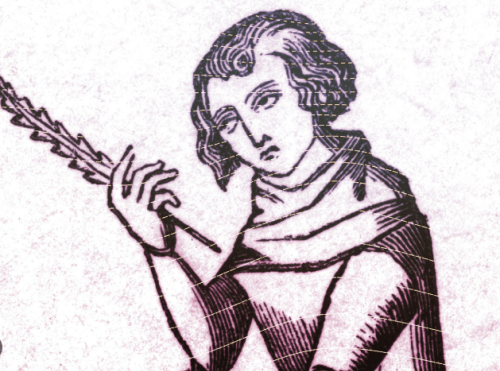
  2. An illustration of Guillaume de Machaut
  3. Public health event in 1350s
    The Bubonic Plague (Black Death)
  4. Definition: multiple pitches sung to one syllable of text
    Melisma
  5. The people who lived and worked in churches and monasteries
    Pope, clergy, & monks
  6. Composed by Machaut and included all 5 Mass movements in one piece
    Mass of Nostre Dame
  7. The Greek word for music, poetry, and telling history
    Musicka
  8. Definition: musical texture that has two or more independent and important melodic lines
    Polyphony
  9. Chants and hymns for worship were in this language
    Latin
  10. The era after the Middle Ages
    The Renaissance Era
  11. Definition: a repeating musical section, generally also with repeated text; sometimes called a “chorus”
    Refrain
  12. People who lived in courts and hired musicians for entertainment
    Kings, dukes, lords, & nobles
  13. The civilization before the Middle Ages
    The Roman Empire
  14. The years of the Middle Ages
    500 to 1450
  15. Definition: vocal music without instrumental accompaniment
    A capella
  16. Definition: music in which each syllable of a text is set to one musical note
    Syllabic
  17. A German abbess who wrote Gregorian chants
    Hildegard von Bingen
  18. Major musical change of the 13th century
    Music transitions from monophonic to polyphonic
  19. He developed a system of music notation in the 11th Century
    Guido d'Arezzo
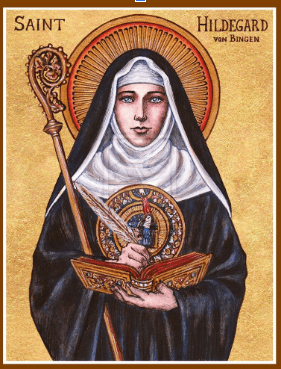
  20. A painting of Hildegard von Bingen
  21. He hired musicians to write over400 songs about The Virgin Mary
    King Alfonso the Wise
  22. Listening example: Agnus Dei from the Nostre Dame Mass
    Agnus Dei from the Nostre Dame Mass
  23. He was famous for writing both sacred Masses and secular love songs
    Guillaume de Machaut
  24. Definition: musical form in which all verses are sung to the same music
    Strophic
  25. Listening Example: Ave Generosa
    Ave Generosa
  26. Definition: religious polyphonic song using strophic form
    Hymn
  27. Description of Dame, à vous sans retollir
    A French song about courtly love that alternates refrain and 3 verses
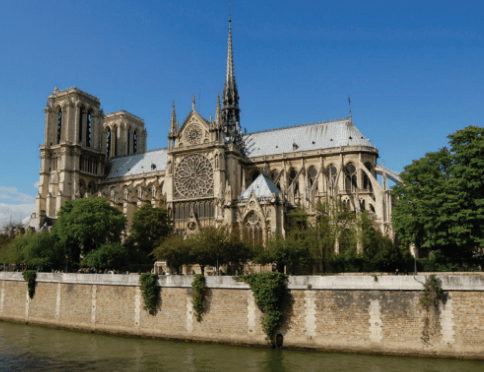
  28. Major architectural achievement in France
    Building of the Notre Dame Cathedral in Paris
  29. Definition: sustained pitch often found in music of the middle ages or earlier and in folk music
    Drone
  30. Definition: text set to a monophonic melody, no written rhythms, typically used in religious worship
    Chant
  31. Definition: love for a beloved, without any concern for whether or not the love will be returned,
    Courtly Love
  32. One type of polyphony where 1 person sang a chant like a bassline and the other person improvised a higher, more complicated melody
    Free organum
  33. Listening example: “The Virgin will aid those who most love her”
    Song of Mary, No. 181: “The Virgin will aid those who most love her”
  34. Definition: the ending of a musical phrase providing a sense of closure,
    Cadence
  35. What do medieval love songs and today's pop music have in common?
    Conjunct melody, narrow range, and repeating refrains (chorus)
  36. This is a picture of the Cathedral of Notre Dame
  37. Listening Example: Dame, à vous sans retollir
    “Lady, to you without reserve I give my heart" aka Dame, à vous sans retollir
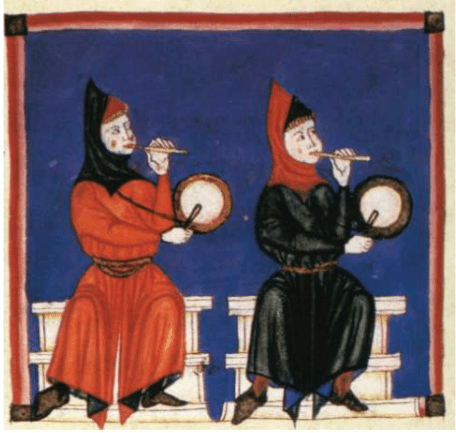
  38. Manuscript from Cantigas de Santa Maria, people playing drums and fifes
  39. Held in monasteries, the three daily prayers of the Divine Office that often included music
    Matins, Lauds, and Vespers
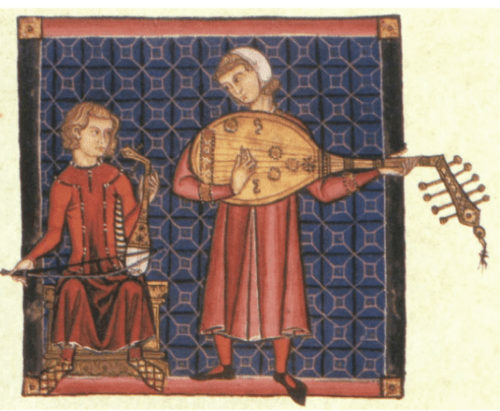
  40. Manuscript from Cantigas de Santa Maria, people playing Rebec and Lute

  41. Polyphonic music was born when they started with 1 chant melody and added a second person singing a 4th above it
    Parallel Organum
  42. Definition: Catholic liturgical texts set to music by composers starting in the middle ages
    Mass