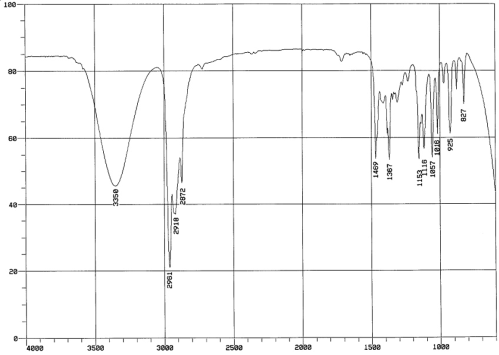
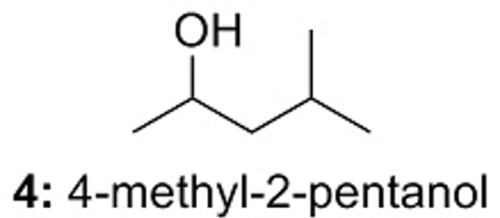
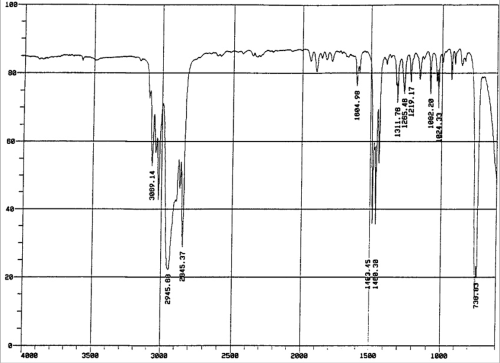
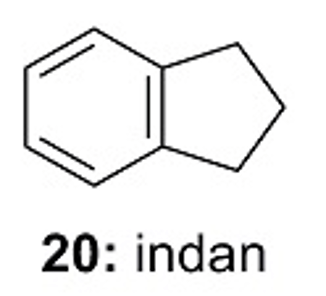
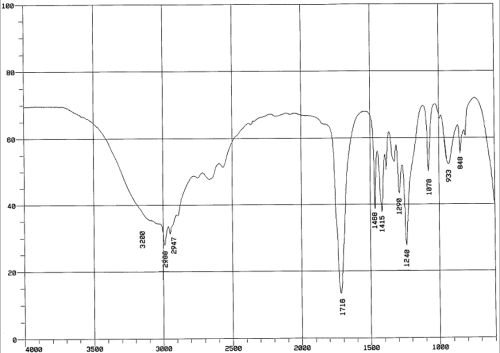
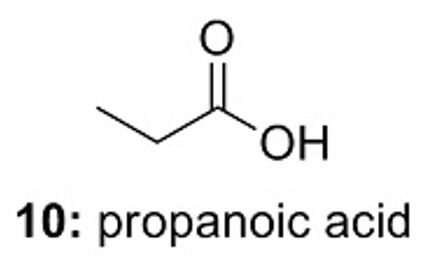
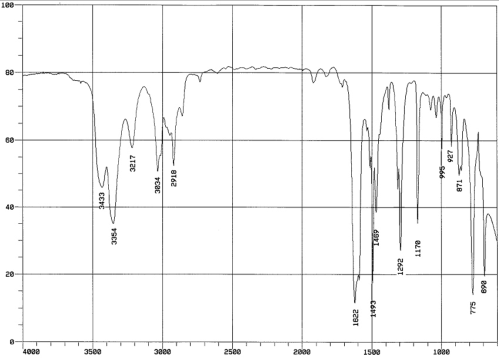
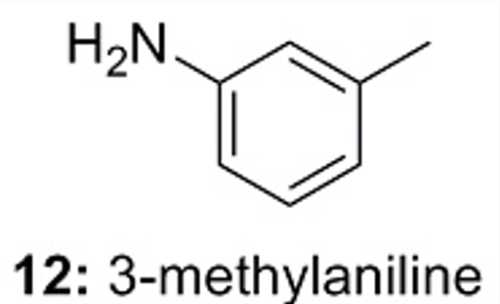
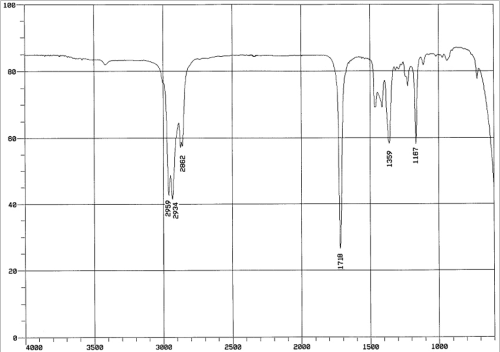
IntensityDependent on thedipole momentof the bond givingrise to the signal.Describes howstrong theabsorbance is.Carboxylicacid2200–3600cm-1 (verybroad) and~1750 cm-1(strong)sp2C-H3000–3100cm-12500-4000cm-1Z-HbondregionFingerprintregionContains signalsresulting from thevibrationalexcitation of mostsingle bonds(stretching andbending)Free!Terminalalkyne∼3300cm-1 and2100–2200 cm-1Alcohol3200–3600 cm-1 (broad)WavenumberThe location ofeach signal in anIR spectrum isreported interms of afrequency-relatedunit.2° N-H1 peak3350–3500 cm-1Internalalkyne2100–2200cm-1400-1500cm-1SinglebondregionShapeResults fromIMFs andvaryingmodes ofstretching.1500-2000cm-1Doublebondregion.sp3C-H2850–3000cm-12000-2500cm-1TriplebondregionAldehyde~1730 cm-1and twoweak signalsat 2750 and2850 cm-11° N-Htwo peaks3350–3500 cm-1spC-H∼3300cm-1DiagnosticregionContains allsignals thatarise fromdouble bonds,triple bonds,and Z-H bonds.IntensityDependent on thedipole momentof the bond givingrise to the signal.Describes howstrong theabsorbance is.Carboxylicacid2200–3600cm-1 (verybroad) and~1750 cm-1(strong)sp2C-H3000–3100cm-12500-4000cm-1Z-HbondregionFingerprintregionContains signalsresulting from thevibrationalexcitation of mostsingle bonds(stretching andbending)Free!Terminalalkyne∼3300cm-1 and2100–2200 cm-1Alcohol3200–3600 cm-1 (broad)WavenumberThe location ofeach signal in anIR spectrum isreported interms of afrequency-relatedunit.2° N-H1 peak3350–3500 cm-1Internalalkyne2100–2200cm-1400-1500cm-1SinglebondregionShapeResults fromIMFs andvaryingmodes ofstretching.1500-2000cm-1Doublebondregion.sp3C-H2850–3000cm-12000-2500cm-1TriplebondregionAldehyde~1730 cm-1and twoweak signalsat 2750 and2850 cm-11° N-Htwo peaks3350–3500 cm-1spC-H∼3300cm-1DiagnosticregionContains allsignals thatarise fromdouble bonds,triple bonds,and Z-H bonds.

IR Spectroscopy - Call List

(Print) Use this randomly generated list as your call list when playing the game. Place some kind of mark (like an X, a checkmark, a dot, tally mark, etc) on each cell as you announce it, to keep track. You can also cut out each item, place them in a bag and pull words from the bag.


1
G G
2
B B
3
O O
4
I I
5
N N
6
G G
7
I I
8
N
9
I I
10
B B
11
B B
12
G G
13
O O
14
B B
15
N N
16
G G
17
N N
18
O O
19
I I
20
N N
21
B B
22
O O
23
O O
24
G G
25
I I
  1. G-Dependent on the dipole moment of the bond giving rise to the signal. Describes how strong the absorbance is.
    G-Intensity

  2. B-2200–3600 cm-1 (very broad) and ~1750 cm-1 (strong)
    B-Carboxylic acid
  3. O-3000–3100 cm-1
    O-sp2 C-H
  4. I-
    I-
  5. N-Z-H bond region
    N-2500-4000 cm-1
  6. G-Contains signals resulting from the vibrational excitation of most single bonds (stretching and bending)
    G-Fingerprint region
  7. I-
    I-
  8. N-Free!
  9. I-
    I-
  10. B-∼3300 cm-1 and 2100–2200 cm-1
    B-Terminal alkyne
  11. B-3200–3600 cm-1 (broad)
    B-Alcohol
  12. G-The location of each signal in an IR spectrum is reported in terms of a frequency-related unit.
    G-Wavenumber
  13. O-1 peak 3350–3500 cm-1
    O-2° N-H
  14. B-2100–2200 cm-1
    B-Internal alkyne
  15. N-Single bond region
    N-400-1500 cm-1
  16. G-Results from IMFs and varying modes of stretching.
    G-Shape
  17. N-Double bond region.
    N-1500-2000 cm-1
  18. O-2850–3000 cm-1
    O-sp3 C-H
  19. I-
    I-
  20. N-Triple bond region
    N-2000-2500 cm-1
  21. B-~1730 cm-1 and two weak signals at 2750 and 2850 cm-1
    B-Aldehyde
  22. O-two peaks 3350–3500 cm-1
    O-1° N-H
  23. O-∼3300 cm-1
    O-sp C-H
  24. G-Contains all signals that arise from double bonds, triple bonds, and Z-H bonds.
    G-Diagnostic region
  25. I-
    I-