y=3sin(2x)-1  y=sinxy= -cosxOn themidlineSinefunctions"start"...Free!y=cosxperiodb helpsusfind...y=3cos(2x)-1y= -sinxmaximumIf a is positivefor a cosinefunction, they-intercept isthe...midlined helpsusfind...y=3cos(x)+2A functionwith amidline aty=-2amplitudea tellsus...off themidlineCosinefunctions"start"...y=5sin(2x)A functionwith aperiod of180 degreesminimumIf a is negativefor a cosinefunction, the y-intercept isthe...y =-2cos(x)A functionwith anamplitudeof 2positiveamplitudeisalways...y=3sin(2x)-1  y=sinxy= -cosxOn themidlineSinefunctions"start"...Free!y=cosxperiodb helpsusfind...y=3cos(2x)-1y= -sinxmaximumIf a is positivefor a cosinefunction, they-intercept isthe...midlined helpsusfind...y=3cos(x)+2A functionwith amidline aty=-2amplitudea tellsus...off themidlineCosinefunctions"start"...y=5sin(2x)A functionwith aperiod of180 degreesminimumIf a is negativefor a cosinefunction, the y-intercept isthe...y =-2cos(x)A functionwith anamplitudeof 2positiveamplitudeisalways...

Basic Trig Graphing Review - Call List

(Print) Use this randomly generated list as your call list when playing the game. There is no need to say the BINGO column name. Place some kind of mark (like an X, a checkmark, a dot, tally mark, etc) on each cell as you announce it, to keep track. You can also cut out each item, place them in a bag and pull words from the bag.


1
2
3
4
5
6
7
8
9
10
11
12
13
14
15
16
17
18
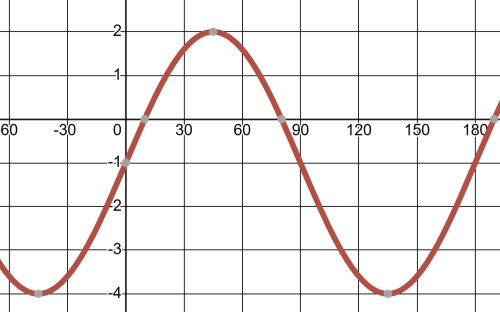
  1. y=3sin(2x)-1
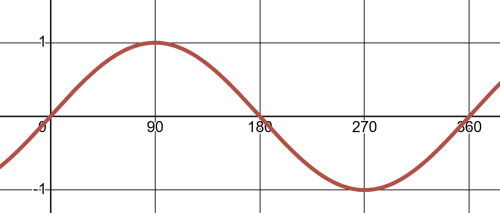
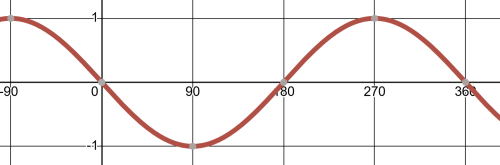
  2. y= sinx
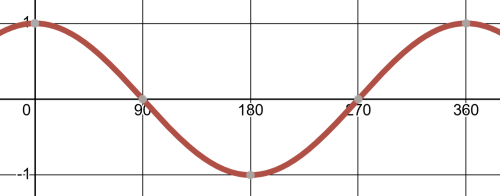
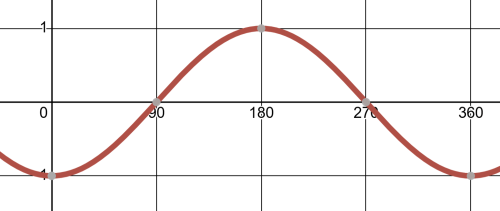
  3. y= -cosx
  4. Sine functions "start"...
    On the midline
  5. Free!
  6. y=cosx
  7. b helps us find...
    period
  8. y=3cos(2x)-1
  9. y= -sinx
  10. If a is positive for a cosine function, the y-intercept is the...
    maximum
  11. d helps us find...
    midline
  12. A function with a midline at y=-2
    y=3cos(x)+2
  13. a tells us...
    amplitude
  14. Cosine functions "start"...
    off the midline
  15. A function with a period of 180 degrees
    y=5sin(2x)
  16. If a is negative for a cosine function, the y-intercept is the...
    minimum

  17. A function with an amplitude of 2
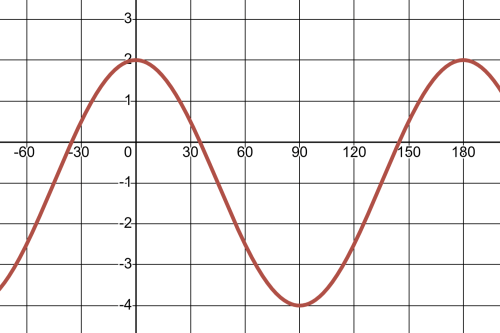
    y = -2cos(x)
  18. amplitude is always...
    positive