The lightness ordarkness of tones orcolors. White is thelightest value; black isthe darkest. The valuehalfway between theseextremes is calledmiddle gray.represent how theartist uses theelements of art tocreate an effectand to helpconvey the artist'sintent.Textureis an area that firstattracts attention in acomposition. This area ismore important whencompared to the otherobjects or elements in acomposition. This can beby contrast of values,more colors, andplacement in the format.An orderlyarrangement ofelements usingthe principlesof designColors made bymixing a primarywith a secondarycolor. Also calledintermediatecolors.ProportionArea in a workof art thatcatches andholds theviewer'sattentionThreecolorsevenlyspacedRadialsymmetry- brings together acomposition with similar units.If your composition was usingwavy lines and organic shapesyou would stay with thosetypes of lines and not put injust one geometric shape.(Notice how similar Harmonyis to Unity - some sourceThe relation ofone object toanother in size,amount,number, ordegree - scaleRhythmPrimarycolorselements areequally spacedaround a centralpoint, as in thespokes comingout of the hub of abicycle tire.MonochromeThe element of artthat refers to thesurface quality orfeel of an object - itssmoothness,roughness, softness,etc.FormPatternVarietyboth sides of acomposition havethe same elementsin the same position,as in a mirror-image,or the two sides of aface.ValueAny threedimensional objectthat can bemeasured byheight, width, anddepth.An element ofart that refers tothe way thingsfeel, or look asif they mightfeel if touched.refers to the visualweight of the elementsof the composition. It isa sense that thepainting feels stableand "feels right."Imbalance causes afeeling of discomfort inthe viewer.is when the artistcreates an area of thecomposition that isvisually dominant andcommands theviewer's attention. Thisis often achieved bycontrast.CenterofinterestSpaceAnother name forrelated colors -have one color incommon. Colorsthat appear nextto each other onthe color wheel.A visual tempo orbeat - oftendescribed asalternating,regular, flowing,progressive, orjazzy.Principle of designreferring to the waythe elements arearranged to create afeeling of stability ina work - parts ofequal visual weight.A way ofcombining visualelements toproduce a senseof action - orimplied motion.MovementLineNeutralcolorsSecondarycolorsAn element ofart that is two-dimensional,flat, or limited toheight andwidthis the result of using theelements of art such thatthey move the viewer's eyearound and within the image.A sense of movement can becreated by diagonal orcurvy lines, either real orimplied, by edges, by theillusion of space, by repetition,ComplementaryEmphasisA large differencebetween twothings: Forexample, roughand smooth, orwhite and black.An element of art that isthree-dimensional andencloses volume;includes height, widthAND depth (as in acube, a sphere, apyramid, or a cylinder).Form may also be freeflowing.The empty oropen areabetween,around, above,below, andwithin objects.An element of artdefined by a pointmoving in space. Linemay be two-or three-dimensional,descriptive, implied, orabstract.An element of art made up ofthree properties: hue, value,and intensity. • Hue: name ofcolor • Value: hue’s lightnessand darkness (a color’s valuechanges when white or blackis added) • Intensity: quality ofbrightness and purity (highintensiColorspectrumA band ofcolors producedwhen white lightshines througha prism.An element of artby which positiveand negativeareas are definedor a sense ofdepth achieved ina work of art .A mark with lengthand direction,created by a pointthat moves acrossa surface.the composition isbalanced due to thecontrast of any of theelements of art. Forexample, a large circle onone side of a compositionmight be balanced by asmall square on the othersideOrange,green, andpurple (orviolet)ContrastBlack,gray,brown,and white.The use of differentlines, shapes,textures, colors andother elements ofdesign to createinterest in a work ofart.HueBalanceElement of artproduced when awavelength of lightstrikes and objectand reflects backto the eyes.is the uniform repetition ofany of the elements of artor any combinationthereof. Anything can beturned into a patternthrough repetition. Someclassic patterns arespirals, grids, weaves.AnalogouscolorsHarmonySymmetryA flat figurecreated whenactual or impliedlines surround aspace - can begeometric ororganic.ColorAn element ofart that refersto the lightnessor darkness ofa color.CompositionAsymmetryA feeling that all ofthe parts areworking togetheras a team - thequality ofwholeness.Colors that aredirectly opposite onthe color wheel.When mixedtogether, they makea neutral gray orbrown.Commonname fora color.is a visual flow through thecomposition. It can be thesuggestion of motion in adesign as you move fromobject to object by way ofplacement and position.Directional movement can becreated with a value pattern. Itis with the placement of darkDirectionalmovementUnity/VarietyMade of onlya single coloror hue and itstints andshades.is the differencebetween elements of artin a composition, suchthat each element ismade stronger in relationto the other. When placednext to each other,contrasting elementscommand the viewer'sattentionMovementTertiaryis createdby movementimplied through therepetitionof elements of art ina non-uniform butorganized way.You want your painting to feelunified such that all theelements fit togethercomfortably. Too much unitycreates monotony, too muchvariety creates chaos. Youneed both. Ideally, you wantareas of interest in yourcomposition along with places ShapeThe lightness ordarkness of tones orcolors. White is thelightest value; black isthe darkest. The valuehalfway between theseextremes is calledmiddle gray.represent how theartist uses theelements of art tocreate an effectand to helpconvey the artist'sintent.Textureis an area that firstattracts attention in acomposition. This area ismore important whencompared to the otherobjects or elements in acomposition. This can beby contrast of values,more colors, andplacement in the format.An orderlyarrangement ofelements usingthe principlesof designColors made bymixing a primarywith a secondarycolor. Also calledintermediatecolors.ProportionArea in a workof art thatcatches andholds theviewer'sattentionThreecolorsevenlyspacedRadialsymmetry- brings together acomposition with similar units.If your composition was usingwavy lines and organic shapesyou would stay with thosetypes of lines and not put injust one geometric shape.(Notice how similar Harmonyis to Unity - some sourceThe relation ofone object toanother in size,amount,number, ordegree - scaleRhythmPrimarycolorselements areequally spacedaround a centralpoint, as in thespokes comingout of the hub of abicycle tire.MonochromeThe element of artthat refers to thesurface quality orfeel of an object - itssmoothness,roughness, softness,etc.FormPatternVarietyboth sides of acomposition havethe same elementsin the same position,as in a mirror-image,or the two sides of aface.ValueAny threedimensional objectthat can bemeasured byheight, width, anddepth.An element ofart that refers tothe way thingsfeel, or look asif they mightfeel if touched.refers to the visualweight of the elementsof the composition. It isa sense that thepainting feels stableand "feels right."Imbalance causes afeeling of discomfort inthe viewer.is when the artistcreates an area of thecomposition that isvisually dominant andcommands theviewer's attention. Thisis often achieved bycontrast.CenterofinterestSpaceAnother name forrelated colors -have one color incommon. Colorsthat appear nextto each other onthe color wheel.A visual tempo orbeat - oftendescribed asalternating,regular, flowing,progressive, orjazzy.Principle of designreferring to the waythe elements arearranged to create afeeling of stability ina work - parts ofequal visual weight.A way ofcombining visualelements toproduce a senseof action - orimplied motion.MovementLineNeutralcolorsSecondarycolorsAn element ofart that is two-dimensional,flat, or limited toheight andwidthis the result of using theelements of art such thatthey move the viewer's eyearound and within the image.A sense of movement can becreated by diagonal orcurvy lines, either real orimplied, by edges, by theillusion of space, by repetition,ComplementaryEmphasisA large differencebetween twothings: Forexample, roughand smooth, orwhite and black.An element of art that isthree-dimensional andencloses volume;includes height, widthAND depth (as in acube, a sphere, apyramid, or a cylinder).Form may also be freeflowing.The empty oropen areabetween,around, above,below, andwithin objects.An element of artdefined by a pointmoving in space. Linemay be two-or three-dimensional,descriptive, implied, orabstract.An element of art made up ofthree properties: hue, value,and intensity. • Hue: name ofcolor • Value: hue’s lightnessand darkness (a color’s valuechanges when white or blackis added) • Intensity: quality ofbrightness and purity (highintensiColorspectrumA band ofcolors producedwhen white lightshines througha prism.An element of artby which positiveand negativeareas are definedor a sense ofdepth achieved ina work of art .A mark with lengthand direction,created by a pointthat moves acrossa surface.the composition isbalanced due to thecontrast of any of theelements of art. Forexample, a large circle onone side of a compositionmight be balanced by asmall square on the othersideOrange,green, andpurple (orviolet)ContrastBlack,gray,brown,and white.The use of differentlines, shapes,textures, colors andother elements ofdesign to createinterest in a work ofart.HueBalanceElement of artproduced when awavelength of lightstrikes and objectand reflects backto the eyes.is the uniform repetition ofany of the elements of artor any combinationthereof. Anything can beturned into a patternthrough repetition. Someclassic patterns arespirals, grids, weaves.AnalogouscolorsHarmonySymmetryA flat figurecreated whenactual or impliedlines surround aspace - can begeometric ororganic.ColorAn element ofart that refersto the lightnessor darkness ofa color.CompositionAsymmetryA feeling that all ofthe parts areworking togetheras a team - thequality ofwholeness.Colors that aredirectly opposite onthe color wheel.When mixedtogether, they makea neutral gray orbrown.Commonname fora color.is a visual flow through thecomposition. It can be thesuggestion of motion in adesign as you move fromobject to object by way ofplacement and position.Directional movement can becreated with a value pattern. Itis with the placement of darkDirectionalmovementUnity/VarietyMade of onlya single coloror hue and itstints andshades.is the differencebetween elements of artin a composition, suchthat each element ismade stronger in relationto the other. When placednext to each other,contrasting elementscommand the viewer'sattentionMovementTertiaryis createdby movementimplied through therepetitionof elements of art ina non-uniform butorganized way.You want your painting to feelunified such that all theelements fit togethercomfortably. Too much unitycreates monotony, too muchvariety creates chaos. Youneed both. Ideally, you wantareas of interest in yourcomposition along with places Shape

Drawing/Art - Call List

(Print) Use this randomly generated list as your call list when playing the game. There is no need to say the BINGO column name. Place some kind of mark (like an X, a checkmark, a dot, tally mark, etc) on each cell as you announce it, to keep track. You can also cut out each item, place them in a bag and pull words from the bag.


1
2
3
4
5
6
7
8
9
10
11
12
13
14
15
16
17
18
19
20
21
22
23
24
25
26
27
28
29
30
31
32
33
34
35
36
37
38
39
40
41
42
43
44
45
46
47
48
49
50
51
52
53
54
55
56
57
58
59
60
61
62
63
64
65
66
67
68
69
70
71
72
73
74
75
76
77
78
79
80
81
82
83
84
85
86
87
88
89
90
91
92
93
94
95
  1. The lightness or darkness of tones or colors. White is the lightest value; black is the darkest. The value halfway between these extremes is called middle gray.
  2. represent how the artist uses the elements of art to create an effect and to help convey the artist's intent.
  3. Texture
  4. is an area that first attracts attention in a composition. This area is more important when compared to the other objects or elements in a composition. This can be by contrast of values, more colors, and placement in the format.
  5. An orderly arrangement of elements using the principles of design
  6. Colors made by mixing a primary with a secondary color. Also called intermediate colors.
  7. Proportion
  8. Area in a work of art that catches and holds the viewer's attention
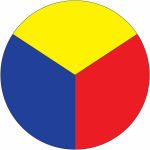
  9. Three colors evenly spaced
  10. Radial symmetry
  11. - brings together a composition with similar units. If your composition was using wavy lines and organic shapes you would stay with those types of lines and not put in just one geometric shape. (Notice how similar Harmony is to Unity - some source
  12. The relation of one object to another in size, amount, number, or degree - scale
  13. Rhythm
  14. Primary colors
  15. elements are equally spaced around a central point, as in the spokes coming out of the hub of a bicycle tire.
  16. Monochrome
  17. The element of art that refers to the surface quality or feel of an object - its smoothness, roughness, softness, etc.
  18. Form
  19. Pattern
  20. Variety
  21. both sides of a composition have the same elements in the same position, as in a mirror-image, or the two sides of a face.
  22. Value
  23. Any three dimensional object that can be measured by height, width, and depth.
  24. An element of art that refers to the way things feel, or look as if they might feel if touched.
  25. refers to the visual weight of the elements of the composition. It is a sense that the painting feels stable and "feels right." Imbalance causes a feeling of discomfort in the viewer.
  26. is when the artist creates an area of the composition that is visually dominant and commands the viewer's attention. This is often achieved by contrast.
  27. Center of interest
  28. Space
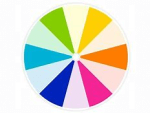
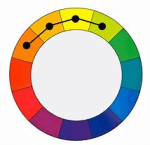
  29. Another name for related colors - have one color in common. Colors that appear next to each other on the color wheel.
  30. A visual tempo or beat - often described as alternating, regular, flowing, progressive, or jazzy.
  31. Principle of design referring to the way the elements are arranged to create a feeling of stability in a work - parts of equal visual weight.
  32. A way of combining visual elements to produce a sense of action - or implied motion.
  33. Movement
  34. Line
  35. Neutral colors
  36. Secondary colors
  37. An element of art that is two-dimensional, flat, or limited to height and width
  38. is the result of using the elements of art such that they move the viewer's eye around and within the image. A sense of movement can be created by diagonal or curvy lines, either real or implied, by edges, by the illusion of space, by repetition,
  39. Complementary
  40. Emphasis
  41. A large difference between two things: For example, rough and smooth, or white and black.
  42. An element of art that is three-dimensional and encloses volume; includes height, width AND depth (as in a cube, a sphere, a pyramid, or a cylinder). Form may also be free flowing.
  43. The empty or open area between, around, above, below, and within objects.
  44. An element of art defined by a point moving in space. Line may be two-or three-dimensional, descriptive, implied, or abstract.
  45. An element of art made up of three properties: hue, value, and intensity. • Hue: name of color • Value: hue’s lightness and darkness (a color’s value changes when white or black is added) • Intensity: quality of brightness and purity (high intensi
  46. Color spectrum
  47. A band of colors produced when white light shines through a prism.
  48. An element of art by which positive and negative areas are defined or a sense of depth achieved in a work of art .
  49. A mark with length and direction, created by a point that moves across a surface.
  50. the composition is balanced due to the contrast of any of the elements of art. For example, a large circle on one side of a composition might be balanced by a small square on the other side
  51. Orange, green, and purple (or violet)
  52. Contrast
  53. Black, gray, brown, and white.
  54. The use of different lines, shapes, textures, colors and other elements of design to create interest in a work of art.
  55. Hue
  56. Balance
  57. Element of art produced when a wavelength of light strikes and object and reflects back to the eyes.
  58. is the uniform repetition of any of the elements of art or any combination thereof. Anything can be turned into a pattern through repetition. Some classic patterns are spirals, grids, weaves.
  59. Analogous colors
  60. Harmony
  61. Symmetry
  62. A flat figure created when actual or implied lines surround a space - can be geometric or organic.
  63. Color
  64. An element of art that refers to the lightness or darkness of a color.
  65. Composition
  66. Asymmetry
  67. A feeling that all of the parts are working together as a team - the quality of wholeness.
  68. Colors that are directly opposite on the color wheel. When mixed together, they make a neutral gray or brown.
  69. Common name for a color.
  70. is a visual flow through the composition. It can be the suggestion of motion in a design as you move from object to object by way of placement and position. Directional movement can be created with a value pattern. It is with the placement of dark
  71. Directional movement
  72. Unity/Variety
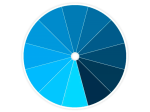
  73. Made of only a single color or hue and its tints and shades.
  74. is the difference between elements of art in a composition, such that each element is made stronger in relation to the other. When placed next to each other, contrasting elements command the viewer's attention
  75. Movement
  76. Tertiary
  77. is created by movement implied through the repetition of elements of art in a non-uniform but organized way.
  78. You want your painting to feel unified such that all the elements fit together comfortably. Too much unity creates monotony, too much variety creates chaos. You need both. Ideally, you want areas of interest in your composition along with places

  79. Shape