(Print) Use this randomly generated list as your call list when playing the game. There is no need to say the BINGO column name. Place some kind of mark (like an X, a checkmark, a dot, tally mark, etc) on each cell as you announce it, to keep track. You can also cut out each item, place them in a bag and pull words from the bag.
1
2
3
4
5
6
7
8
9
10
11
12
13
14
15
16
17
18
19
20
21
22
23
24
25
26
27
Matter cannot be created or destroyed
Law of Conservation of Mass
What is a measure of the average kinetic energy of particles in an object?
Temperature
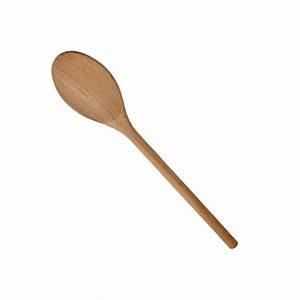
What spoon would not burn your hand if it was in hot chocolate?
When you heat water it turns in to
Gas
Examples of Insulators
Rubber, cloth, air, wood, and plastic
When energy goes into the reaction and the reaction feels cold.
Endothermic
If a reaction has 50g of chemical 1 and 50g of chemical . What is the mass of the product?
100g
Melting or freezing water is a chemical change. Yes or no?
No
Molecules move faster in ______ substances
Warmer
Heat energy is also known as...
Thermal Energy
Material that allows heat and electricity to flow through it
Conductor
Physical properties are observable. Yes or no?
Yes
The smallest particle of an elements
Atoms
How would you increase the product an exothermic reaction?
Increase Temperature
Two or more substances combine to form something new
Chemical Reaction
Atoms are in constant motion. True or False?
True
Heat always travels from...
Warm to Cool
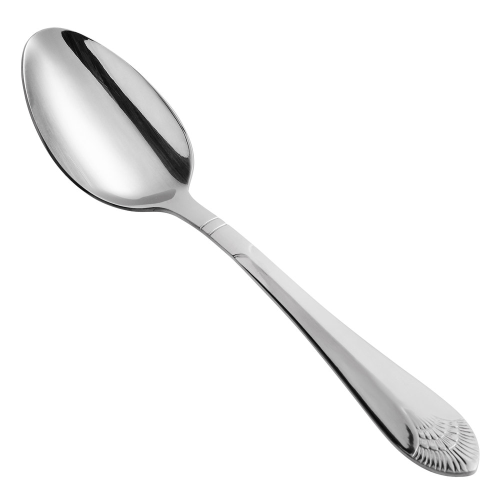
What spoon would burn your hand if it was in hot chocolate?
What is anything that takes up space and has mass
Matter
When energy leaves the reaction and the reaction feels warm
Exothermic
Material that does not allow heat and electricity to flow through it
Insulator
A substance that takes part in a chemical reaction
Reactant
A substance produced in a chemical reaction
Product
Toasting bread is a physical change. T or F
False
What is the energy of motion?
Kinetic Energy
Examples of Conductors
Water, copper, gold, silver, and most metals
A change in the physical properties, stays the same substance
Physical Change