(Print) Use this randomly generated list as your call list when playing the game. There is no need to say the BINGO column name. Place some kind of mark (like an X, a checkmark, a dot, tally mark, etc) on each cell as you announce it, to keep track. You can also cut out each item, place them in a bag and pull words from the bag.
1
2
3
4
5
6
7
8
9
10
11
12
13
14
15
16
17
18
19
20
21
22
23
24
This steroid helps to stabilize the phospholipid bilayer of the cell.
cholesterol
The type of energy needed for active transport.
ATP
moving substances through the membrane from high to low concentration using no energy
passive transport
movement of materials into or out of the cell
membrane transport
a protein that goes all the way through the membrane for transport of materials
integral protein
This process moves materials out of the cell.
exocytosis
a protein in the cell membrane that is either on one side or the other, does not span the membrane
peripheral protein
"Cell eating" the cell takes in solid particles
phagocytosis
Cell drinking - the cell takes in fluid
pinocytosis
A cell process which takes material into the cell.
endocytosis
Inflamed cells in your sore throat do this when you gargle with salt water.
shrink
This is powered by ATP and moves materials against the concentration gradient.
active transport
the diffusion of water
osmosis
Only certain materials are able to pass through the membrane.
semi-permeable
The cell membrane is made of this.
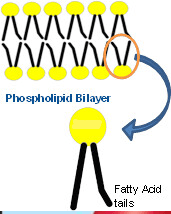
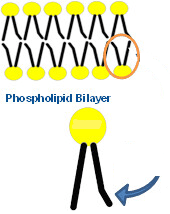
phospholipid bilayer
The concentration is higher.
hypertonic
The boundary of the cell which controls movement of materials into and out of the cell.
cell membrane
polar phospholipid heads
Passive transport through the cell membrane that requires a protein channel.
facilitated diffusion
The concentration is the same and water flows equally into and out of the cell.
isotonic
Another name for the cell membrane.
plasma membrane
hydrophobic fatty acid tails
Cells do this in a hypotonic sollution.
swell and burst