(Print) Use this randomly generated list as your call list when playing the game. There is no need to say the BINGO column name. Place some kind of mark (like an X, a checkmark, a dot, tally mark, etc) on each cell as you announce it, to keep track. You can also cut out each item, place them in a bag and pull words from the bag.
1
2
3
4
5
6
7
8
9
10
11
12
13
14
15
16
17
18
19
20
21
22
23
24
25
26
27
28
29
30
31
32
33
34
35
Women are often less likely to receive bystander CPR because rescuers often fear accusations of inappropriate touching, sexual assault or injuring the victim.
Cardiovascular diseases kill more than 50,000 Black women annually. Stroke is a leading cause of death among Black women.
Female heart attack survivors twice as likely to see declines in memory, cognitive ability.
Risk Factors That Can Be Managed
High blood pressure
Smoking
High blood cholesterol
Lack of regular activity
Obesity or overweight
Diabetes
Stroke - Sudden numbness or weakness of the face, arm or leg, especially on one side of the body
Stroke - Sudden severe headache with no known cause
Stroke - Sudden confusion, trouble speaking or understanding.
#GoRedGetFit!
On average, Hispanic women are likely to develop heart disease 10 years earlier than non-Hispanics.
Going through menopause does not cause cardiovascular disease.
Cardiovascular disease is the No. 1 killer of new moms and accounts for over on-third of maternal deaths.
Among Black women ages 20 and older, nearly 59% have cardiovascular disease.
Risk Factors You Can't Control
Age
Gender
Heredity (family health history)
Race
Previous stroke or heart attack
Heart Attack - Pain or discomfort in one or both arms, the back, neck, jaw or stomach.
Talk to your healthcare provider today to learn about your Blood Pressure, Cholesterol, Blood Sugar and BMI (Body Mass Index). Your heart depends on it.
Free!
Friday, February 3, 2023
Heart Attack - Uncomfortable pressure, squeezing, fullness or pain in the center of your chest.
Stroke - Sudden trouble seeing or blurred vision in one or both eyes.
Among females 20 years and older, nearly 45% are living with some form of cardiovascular disease.
Heart Attack - Shortness of breath with or without chest discomfort.
Myth: Heart disease is for old people
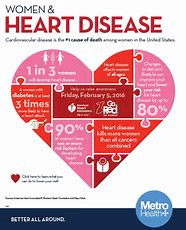
Fact: Cardiovascular disease is the No. 1 killer of women, causing 1 in 3 deaths each year
Most cardiac and stroke events can be prevented through education and lifestyle changes.
While there are an estimated 4.1 million female stroke survivors living today, approximately 57.5% of total stroke deaths are in women.
Myth: Heart disease is for men, and cancer is the real threat for women
Heart Attack - As with men, women’s most common heart attack symptom is chest pain or discomfort.
Myth: Heart disease runs in my family, so there’s nothing I can do about it
Stroke - Sudden trouble walking, dizziness, loss of balance or coordination
Myth: Heart disease doesn’t affect women who are fit
Cardiovascular disease kills more women than all forms of cancer combined.