PopulationIncreaseWhat happensto population instage two of thedemographictransitiontheory?EcosystemA system madeup of theinteraction ofliving thingsand theirenvironment.CensusA countingthepopulation.InfantmortalityrateThe number ofinfant deaths(under 1 year)per 1,000 livebirths in a givenyear.LifeExpectancyThe averagenumber of yearsthat a person isexpected to livein a particularcountry.ThomasRobertMalthusArgued that theworld’spopulationwould outgrowthe food supply.Totalfertilityrate(TFR)The averagenumber of childrenborn to any onewoman, based onthe overall rates offertility in acountry.MigrationThemovement ofpeople inand out of acountry.VitalstatisticsRecords ofbirths,deaths, andmarriages.DemographyThe studyofpopulation.EcologyThe study ofthe interactionsbetween theenvironmentand livingcreatures.FertilityThe rate ofchildbearingin a country.NigerWhich countryhas one of thehighestbirthrates inthe world?EmigrationThemovement ofpeople out ofa country.8BillionThe worldpopulationhas alreadyexceeded______.EnvironmentalRacismThe pattern ofhigherenvironmentalrisks for poorindividuals.BirthrateCalculated asthe number oflive births per1,000individuals inone year.MortalityThe rate ofdeath for anation’spopulation.DeathrateThe numberof deaths per1,000 peoplein a year.ZeroPopulationGrowthJapan isexperiencing thisbecause the birthrate is lower thanthe rate needed tomaintain a steadypopulation.Population   PyramidA visualrepresentationof a populationscompositionthat is used bydemographers.ImmigrationThemovement ofpeople into acountry.TrueNorth Americanculturecontributes toenvironmentalissues.FalseThe lifeexpectancyin Japan is64 years.PopulationIncreaseWhat happensto population instage two of thedemographictransitiontheory?EcosystemA system madeup of theinteraction ofliving thingsand theirenvironment.CensusA countingthepopulation.InfantmortalityrateThe number ofinfant deaths(under 1 year)per 1,000 livebirths in a givenyear.LifeExpectancyThe averagenumber of yearsthat a person isexpected to livein a particularcountry.ThomasRobertMalthusArgued that theworld’spopulationwould outgrowthe food supply.Totalfertilityrate(TFR)The averagenumber of childrenborn to any onewoman, based onthe overall rates offertility in acountry.MigrationThemovement ofpeople inand out of acountry.VitalstatisticsRecords ofbirths,deaths, andmarriages.DemographyThe studyofpopulation.EcologyThe study ofthe interactionsbetween theenvironmentand livingcreatures.FertilityThe rate ofchildbearingin a country.NigerWhich countryhas one of thehighestbirthrates inthe world?EmigrationThemovement ofpeople out ofa country.8BillionThe worldpopulationhas alreadyexceeded______.EnvironmentalRacismThe pattern ofhigherenvironmentalrisks for poorindividuals.BirthrateCalculated asthe number oflive births per1,000individuals inone year.MortalityThe rate ofdeath for anation’spopulation.DeathrateThe numberof deaths per1,000 peoplein a year.ZeroPopulationGrowthJapan isexperiencing thisbecause the birthrate is lower thanthe rate needed tomaintain a steadypopulation.Population   PyramidA visualrepresentationof a populationscompositionthat is used bydemographers.ImmigrationThemovement ofpeople into acountry.TrueNorth Americanculturecontributes toenvironmentalissues.FalseThe lifeexpectancyin Japan is64 years.

Sociology Unit 5B - Call List

(Print) Use this randomly generated list as your call list when playing the game. There is no need to say the BINGO column name. Place some kind of mark (like an X, a checkmark, a dot, tally mark, etc) on each cell as you announce it, to keep track. You can also cut out each item, place them in a bag and pull words from the bag.


1
2
3
4
5
6
7
8
9
10
11
12
13
14
15
16
17
18
19
20
21
22
23
24
  1. What happens to population in stage two of the demographic transition theory?
    Population Increase
  2. A system made up of the interaction of living things and their environment.
    Ecosystem
  3. A counting the population.
    Census
  4. The number of infant deaths (under 1 year) per 1,000 live births in a given year.
    Infant mortality rate
  5. The average number of years that a person is expected to live in a particular country.
    Life Expectancy
  6. Argued that the world’s population would outgrow the food supply.
    Thomas Robert Malthus
  7. The average number of children born to any one woman, based on the overall rates of fertility in a country.
    Total fertility rate (TFR)
  8. The movement of people in and out of a country.
    Migration
  9. Records of births, deaths, and marriages.
    Vital statistics
  10. The study of population.
    Demography
  11. The study of the interactions between the environment and living creatures.
    Ecology
  12. The rate of childbearing in a country.
    Fertility
  13. Which country has one of the highest birthrates in the world?
    Niger
  14. The movement of people out of a country.
    Emigration
  15. The world population has already exceeded ______.
    8 Billion
  16. The pattern of higher environmental risks for poor individuals.
    Environmental Racism
  17. Calculated as the number of live births per 1,000 individuals in one year.
    Birthrate
  18. The rate of death for a nation’s population.
    Mortality
  19. The number of deaths per 1,000 people in a year.
    Death rate
  20. Japan is experiencing this because the birth rate is lower than the rate needed to maintain a steady population.
    Zero Population Growth
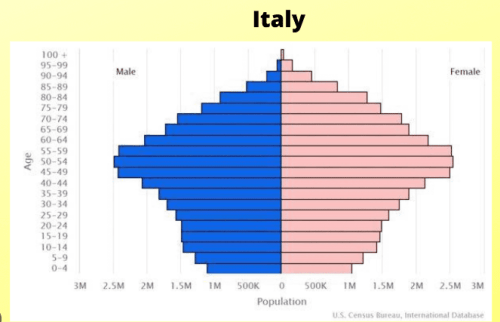
  21. A visual representation of a populations composition that is used by demographers.
    Population Pyramid
  22. The movement of people into a country.
    Immigration
  23. North American culture contributes to environmental issues.
    True

  24. The life expectancy in Japan is 64 years.
    False