DirectorThe personwho tells theactors whereto stand andmove in a play.CuelineThe linethat comesbeforeyour lineDictionHowclearlyyou canbe heardCASTGestureA smallmovementusually madewith yourhands or armsStageWhere theactors standduring aplay.CostumeThe clothesthat actorswear in aplay.PropsAny objectthat an actorholds in theirhand duringa play.StagedirectionsThe part ofthe scriptthat tellsactors whatactions to doBlockingDecidingwhere tostand ormove on thestageRESOLUTIONDownstageWhere youstand onstage that isclosest tothe audienceCLIMAXPlayA storyperformedby actorson a stage.EXPOSITIONCharactersThe peopleor animals ina play thatthe actorbecomes.UpstageWhere youstand onstage that isfurthest fromthe audiencedressingroomRehearsalWhen youpractice aplaySetThebackgroundthat showswhere the storytakes place.SceneWhen the scriptis broken downinto differentparts, likechapters in abookAudienceThepeoplewho watcha play.MusicalA play thatincludessongs anddancesPlaywrightThepersonwho writesthe play.TableauA frozenpictures madeby actorsbodies thattells an ideaDialogueWhen twoor moreactors aretalkingScriptThewrittenwords ofthe play.VolumeHow loudor quietyou areSpotlightThe light thatis usedusually onone personon stage.DirectorThe personwho tells theactors whereto stand andmove in a play.CuelineThe linethat comesbeforeyour lineDictionHowclearlyyou canbe heardCASTGestureA smallmovementusually madewith yourhands or armsStageWhere theactors standduring aplay.CostumeThe clothesthat actorswear in aplay.PropsAny objectthat an actorholds in theirhand duringa play.StagedirectionsThe part ofthe scriptthat tellsactors whatactions to doBlockingDecidingwhere tostand ormove on thestageRESOLUTIONDownstageWhere youstand onstage that isclosest tothe audienceCLIMAXPlayA storyperformedby actorson a stage.EXPOSITIONCharactersThe peopleor animals ina play thatthe actorbecomes.UpstageWhere youstand onstage that isfurthest fromthe audiencedressingroomRehearsalWhen youpractice aplaySetThebackgroundthat showswhere the storytakes place.SceneWhen the scriptis broken downinto differentparts, likechapters in abookAudienceThepeoplewho watcha play.MusicalA play thatincludessongs anddancesPlaywrightThepersonwho writesthe play.TableauA frozenpictures madeby actorsbodies thattells an ideaDialogueWhen twoor moreactors aretalkingScriptThewrittenwords ofthe play.VolumeHow loudor quietyou areSpotlightThe light thatis usedusually onone personon stage.

Theatre Bingo - Call List

(Print) Use this randomly generated list as your call list when playing the game. Place some kind of mark (like an X, a checkmark, a dot, tally mark, etc) on each cell as you announce it, to keep track. You can also cut out each item, place them in a bag and pull words from the bag.

1
N N
2
I I
3
O O
4
N
5
B B
6
I I
7
B B
8
I I
9
N N
10
N N
11
O
12
I I
13
B
14
B B
15
G
16
G G
17
B B
18
I
19
G G
20
O O
21
G G
22
N N
23
B B
24
O O
25
O O
26
O O
27
G G
28
G G
29
I I
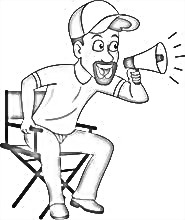
  1. N-The person who tells the actors where to stand and move in a play.
    N-Director
  2. I-The line that comes before your line
    I-Cue line
  3. O-How clearly you can be heard
    O-Diction
  4. N-CAST
  5. B-A small movement usually made with your hands or arms
    B-Gesture
  6. I-Where the actors stand during a play.
    I-Stage
  7. B-The clothes that actors wear in a play.
    B-Costume
  8. I-Any object that an actor holds in their hand during a play.
    I-Props
  9. N-The part of the script that tells actors what actions to do
    N-Stage directions
  10. N-Deciding where to stand or move on the stage
    N-Blocking
  11. O-RESOLUTION
  12. I-Where you stand on stage that is closest to the audience
    I-Downstage
  13. B-CLIMAX
  14. B-A story performed by actors on a stage.
    B-Play
  15. G-EXPOSITION
  16. G-The people or animals in a play that the actor becomes.
    G-Characters
  17. B-Where you stand on stage that is furthest from the audience
    B-Upstage
  18. I-dressing room
  19. G-When you practice a play
    G-Rehearsal
  20. O-The background that shows where the story takes place.
    O-Set
  21. G-When the script is broken down into different parts, like chapters in a book
    G-Scene
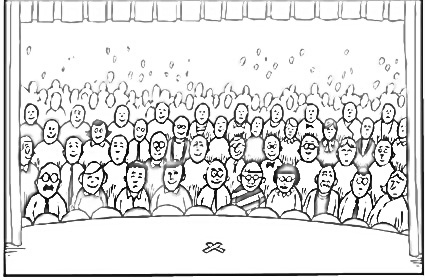
  22. N-The people who watch a play.
    N-Audience
  23. B-A play that includes songs and dances
    B-Musical
  24. O-The person who writes the play.
    O-Playwright
  25. O-A frozen pictures made by actors bodies that tells an idea
    O-Tableau
  26. O-When two or more actors are talking
    O-Dialogue
  27. G-The written words of the play.
    G-Script
  28. G-How loud or quiet you are
    G-Volume
  29. I-The light that is used usually on one person on stage.
    I-Spotlight