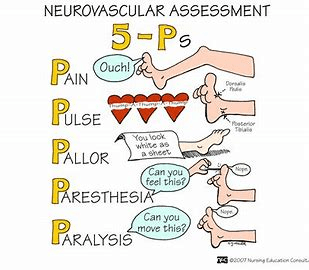
Buck's traction aspirin, SCDs, TED hose lovenox DVT prophylaxis fat particles lodge in vessel fascia can't expand to increased pressure surgical fasciatomy This traction has an external pin distal to stabilized area Risk factors for compartment syndrome trauma, plaster cast, ortho postops, burns, infected limb ORIF open reduction internal fixation Osteoporosis and falls Risk factors for hip fx 1-3 days after injury (usually femur) when trauma pt will typically develop fat embolism Pulse use a doppler if you can't palpate this 85% % of hip fractures in people older than 65 Pain Worry if this is out proportion to injury - - not relieved by meds out of bed This should happen on post op day 0 Paralysis Late sign of prolonged nerve compression or muscle necrosis neurovascular assessment assessing nerve function and blood flow to injured extremity BKA below the knee amputation This should never be placed under the knee after TKA something to reduce risk or hip fracture Early mobilization decreases mortality rate after ortho post op neurovascular assessment focus areas (5Ps) Pallor sign of arterial insufficiency below level of injury Paresthesia decreased sensation, hypersensation - result of nerve compression age, type of fx, bone quality factors considered for hip fx treatment Buck's traction aspirin, SCDs, TED hose lovenox DVT prophylaxis fat particles lodge in vessel fascia can't expand to increased pressure surgical fasciatomy This traction has an external pin distal to stabilized area Risk factors for compartment syndrome trauma, plaster cast, ortho postops, burns, infected limb ORIF open reduction internal fixation Osteoporosis and falls Risk factors for hip fx 1-3 days after injury (usually femur) when trauma pt will typically develop fat embolism Pulse use a doppler if you can't palpate this 85% % of hip fractures in people older than 65 Pain Worry if this is out proportion to injury - - not relieved by meds out of bed This should happen on post op day 0 Paralysis Late sign of prolonged nerve compression or muscle necrosis neurovascular assessment assessing nerve function and blood flow to injured extremity BKA below the knee amputation This should never be placed under the knee after TKA something to reduce risk or hip fracture Early mobilization decreases mortality rate after ortho post op neurovascular assessment focus areas (5Ps) Pallor sign of arterial insufficiency below level of injury Paresthesia decreased sensation, hypersensation - result of nerve compression age, type of fx, bone quality factors considered for hip fx treatment
(Print)
G-Buck's traction
O-DVT prophylaxis
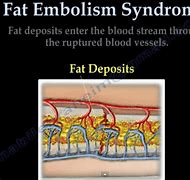
B-fat particles lodge in vessel
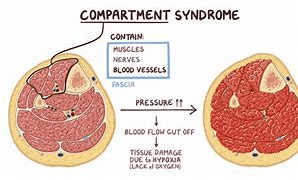
B-fascia can't expand to increased pressure
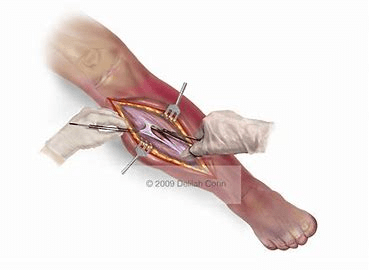
O-surgical fasciatomy
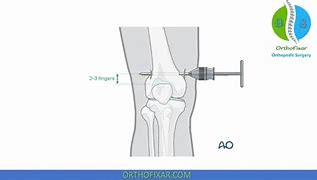
N-This traction has an external pin distal to stabilized area
B-trauma, plaster cast, ortho postops, burns, infected limb
I-open reduction internal fixation
B-Risk factors for hip fx
G-when trauma pt will typically develop fat embolism
G-use a doppler if you can't palpate this
N-% of hip fractures in people older than 65
N-Worry if this is out proportion to injury - - not relieved by meds
O-This should happen on post op day 0
N-Late sign of prolonged nerve compression or muscle necrosis
O-assessing nerve function and blood flow to injured extremity
I-below the knee amputation
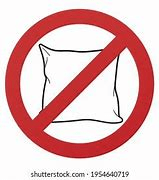
G-This should never be placed under the knee after TKA
O-something to reduce risk or hip fracture
I-decreases mortality rate after ortho post op
I-neurovascular assessment focus areas (5Ps)
G-sign of arterial insufficiency below level of injury
I-decreased sensation, hypersensation - result of nerve compression
B-factors considered for hip fx treatment