(Print) Use this randomly generated list as your call list when playing the game. There is no need to say the BINGO column name. Place some kind of mark (like an X, a checkmark, a dot, tally mark, etc) on each cell as you announce it, to keep track. You can also cut out each item, place them in a bag and pull words from the bag.
1
2
3
4
5
6
7
8
9
10
11
12
13
14
15
16
17
18
19
20
21
22
23
24
25
26
27
28
29
30
31
32
33
34
35
36
37
any organism whose cells do not have nuclei
Prokaryotic
a protist that can be autotrophic or heterotrophic
Euglena
the organelle in plants or plant-like protists that helps make energy from the sun
Chloroplast
the euglena's eyespot is to help it find...
Sunlight
an organelle that stores food, water and waste
Vacuole
the process autotrophs use to turn sunlight into food
Photosynthesis
hair-like structure on the surface of certain protists to aid in movement
Cilia
Unicellular eukaryotic organism that is not an animal, plant or fungi
Protist
Organelle that is the "control center" of the cell
Nucleus
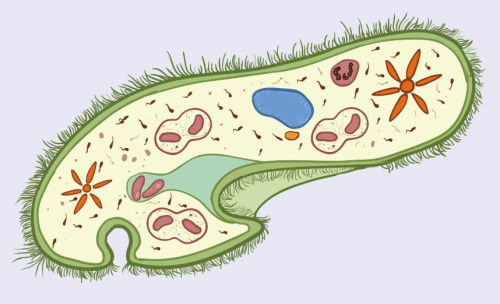
picture of a paramecium
a tail-like structure that helps some protists (like Euglena and Volvox) move
Flagella
A living thing made of more than one cell is considered...
Multicellular
an organism that makes its own food through photosynthesis
Autotroph
THREE protists that are (or can be) heterotrophs
Amoeba, Paramecium and Euglena
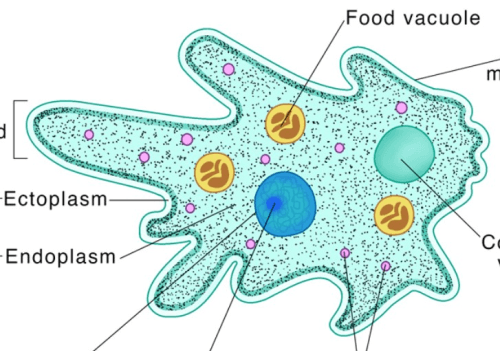
picture of an amoeba
protist that uses a pseudopod to move
Amoeba
the "instruction manual" of genetic information for making new cells; found in the nucleus
DNA
any organism whose cells have nuclei
Eukaryotic
a plant-like protist that exists in a colony and uses 2 flagella to move
Volvox
reproduction using genetic information from two different organisms
Sexual Reproduction
pseudopod means...
False Foot
a flagella is kind of like a...
Tail
Organelle that helps many protists drain out too much water
Contractile Vacuole
a "false foot" that helps amoeba and other sarcodines move
Pseudopod
cilia is kind of like...
Hair
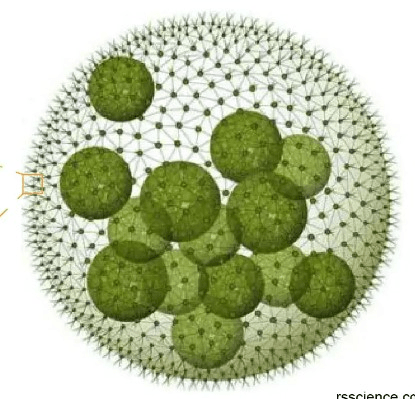
picture of a volvox
organelle inside the Euglena to help it find light
Eyespot
TWO protists that are (or can be) autotrophs
Euglena and Volvox
a living thing made up of only one cell
Unicellular
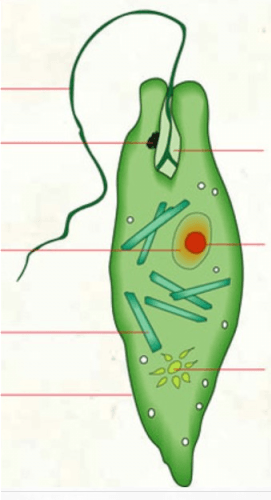
picture of a euglena
a paramecium has not just one, but...
2 nuclei
an animal-like protist
Protozoan
an organism that must hunt/find food
Heterotroph
the jelly-like substance that fills cells and unicellular organisms
Cytoplasm
a plant-like protist
Algae
asexual reproduction from the splitting of one organism into two identical organisms
Binary Fission