(Print) Use this randomly generated list as your call list when playing the game. There is no need to say the BINGO column name. Place some kind of mark (like an X, a checkmark, a dot, tally mark, etc) on each cell as you announce it, to keep track. You can also cut out each item, place them in a bag and pull words from the bag.
1
2
3
4
5
6
7
8
9
10
11
12
13
14
15
16
17
18
19
20
21
22
23
24
25
26
27
28
29
30
31
32
The density of water
1 g/mL
These plates move apart from one another
Divergent Plates
The part of the Earth that contains the continental and oceanic crusts
Lithosphere
A radioactive element with atomic number 90
Thorium
the smallest unit of matter that still has the properties of an element
Atom
These will mix because the density of the liquid on the top is more than the liquid on the bottom
Cold Water on top of Hot Water
More dense substances tend to do this
Sink
This is the least dense part of the Earth
Continental Crust
These subatomic particles with a positive charge determine an atom's identity
Proton
This part of the Earth is liquid and creates Earth's magnetic field
Outer Core
A radioactive element with an atomic number 92
Uranium
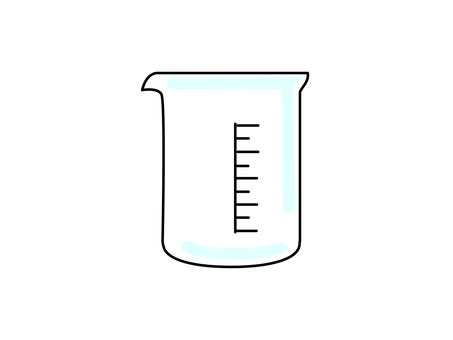
This piece of lab equipment is mainly used to store liquids and is not accurate to measure with
A tiny, dense cluster of protons and neutrons in the center of an atom that contains over 99.9% of the atom’s mass but occupies almost no space.
Nucleus
These molecules tend to rise
Warm Molecules
Where earthquakes and volcanoes tend to happen
Plate Boundary
Energy of objects in motion
Kinetic Energy
These will not mix because the liquid on top is less dense than the liquid on the bottom
Hot Water on top of Cold Water
This layer of the Earth is found underneath the ocean
Oceanic Crust
This layer of the Earth is where convection occurs that moves the tectonic plates
Asthenosphere
The movement of heat in a gas or liquid due to a difference in temperature
Convection
A subatomic particle with a neutral charge that acts like "nuclear glue," helping to hold the protons together
Neutron
This number gives the number of protons for each atom
Atomic Number
These molecules tend to sink
Cold Molecules
Less dense substances tend to do this
Rise
m
÷
V
Density
This part of the Earth is made of solid iron and nickel
Inner Core
These plates move towards one another
Convergent Plates
The number of protons + neutrons in an atom
Atomic Mass
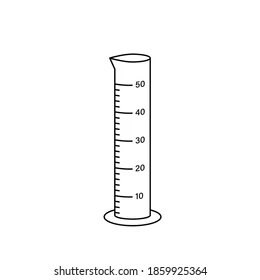
This piece of lab equipment is used to precisely measure liquids
The average kinetic energy of molecules
Temperature
A subatomic particle with a negative charge that are considered to be massless
Electron