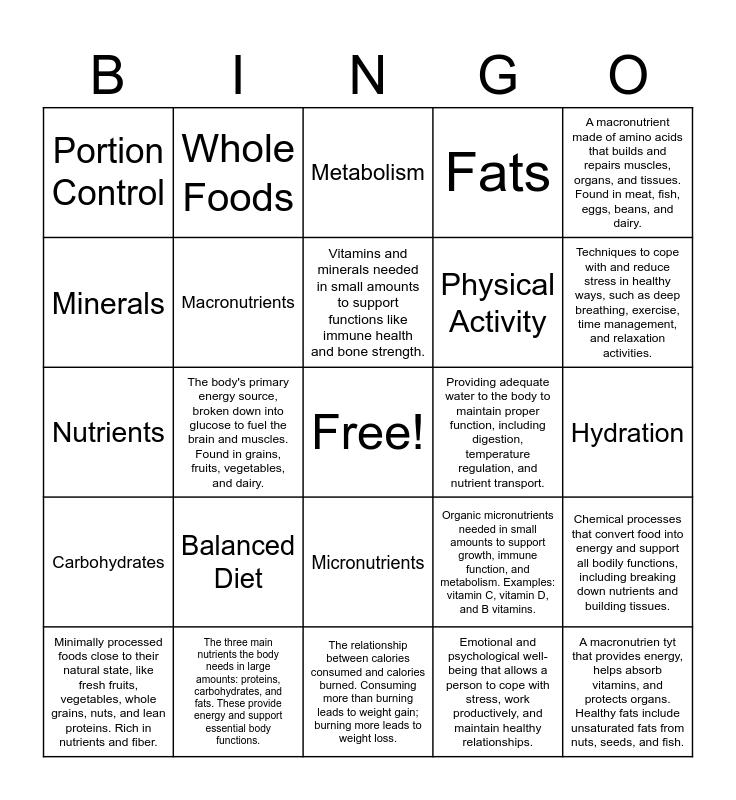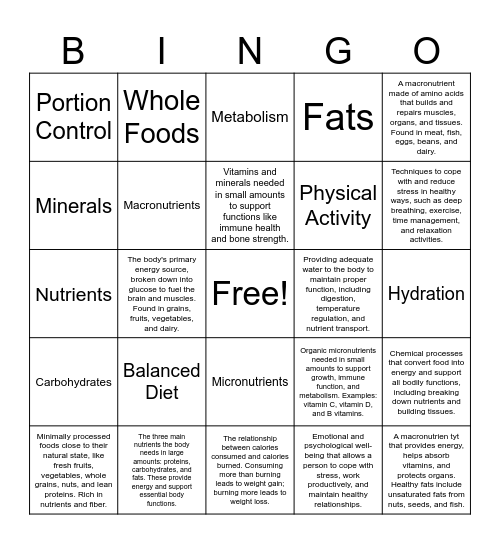
This bingo card has a free space and 41 words: Vocab Unit 1, Nutrients, Substances in food that the body needs to function, grow, and stay healthy., Macronutrients, The three main nutrients the body needs in large amounts: proteins, carbohydrates, and fats. These provide energy and support essential body functions., Micronutrients, Vitamins and minerals needed in small amounts to support functions like immune health and bone strength., Protein, A macronutrient made of amino acids that builds and repairs muscles, organs, and tissues. Found in meat, fish, eggs, beans, and dairy., Carbohydrates, The body's primary energy source, broken down into glucose to fuel the brain and muscles. Found in grains, fruits, vegetables, and dairy., Fats, A macronutrien tyt that provides energy, helps absorb vitamins, and protects organs. Healthy fats include unsaturated fats from nuts, seeds, and fish., Hydration, Providing adequate water to the body to maintain proper function, including digestion, temperature regulation, and nutrient transport., Balanced Diet, An eating pattern with variety from all food groups in appropriate amounts to provide necessary nutrients and support overall health., Portion Control, Eating appropriate amounts of food to meet nutritional needs without overeating, helping maintain a healthy weight., Metabolism, Chemical processes that convert food into energy and support all bodily functions, including breaking down nutrients and building tissues., Energy Balance, The relationship between calories consumed and calories burned. Consuming more than burning leads to weight gain; burning more leads to weight loss., Physical Activity, Bodily movement that requires energy, including exercise, sports, and daily tasks. Strengthens the heart, muscles, and bones while improving mental health., Mental Wellness, Emotional and psychological well-being that allows a person to cope with stress, work productively, and maintain healthy relationships., Stress Management, Techniques to cope with and reduce stress in healthy ways, such as deep breathing, exercise, time management, and relaxation activities., Sleep Hygiene, Healthy habits that promote quality sleep, including regular sleep schedules, comfortable environments, and limiting screen time before bed. Teens need 8-10 hours nightly., Whole Foods, Minimally processed foods close to their natural state, like fresh fruits, vegetables, whole grains, nuts, and lean proteins. Rich in nutrients and fiber., Vitamins, Organic micronutrients needed in small amounts to support growth, immune function, and metabolism. Examples: vitamin C, vitamin D, and B vitamins., Minerals, Inorganic micronutrients essential for functions like building bones, transmitting nerve signals, and maintaining fluid balance. Examples: calcium, iron, and potassium., Fiber, A type of carbohydrate in plant foods that supports digestive health, maintains steady blood sugar, and promotes fullness. Found in fruits, vegetables, whole grains, and legumes., Empty Calories and Calories from foods with little to no nutritional value (vitamins, minerals, protein, or fiber). Common sources: sugary drinks, candy, and chips..
Nutrition Bingo | FOOD AND NUTRITION SCHRODINGO 😎 | NATIONAL NUTRITION MONTH 2025 | Nutrition Bingo | Nutrition Study Bingo
Share this URL with your players:
For more control of your online game, create a clone of this card first.
Learn how to conduct a bingo game.
With players vying for a you'll have to call about __ items before someone wins. There's a __% chance that a lucky player would win after calling __ items.
Tip: If you want your game to last longer (on average), add more unique words/images to it.