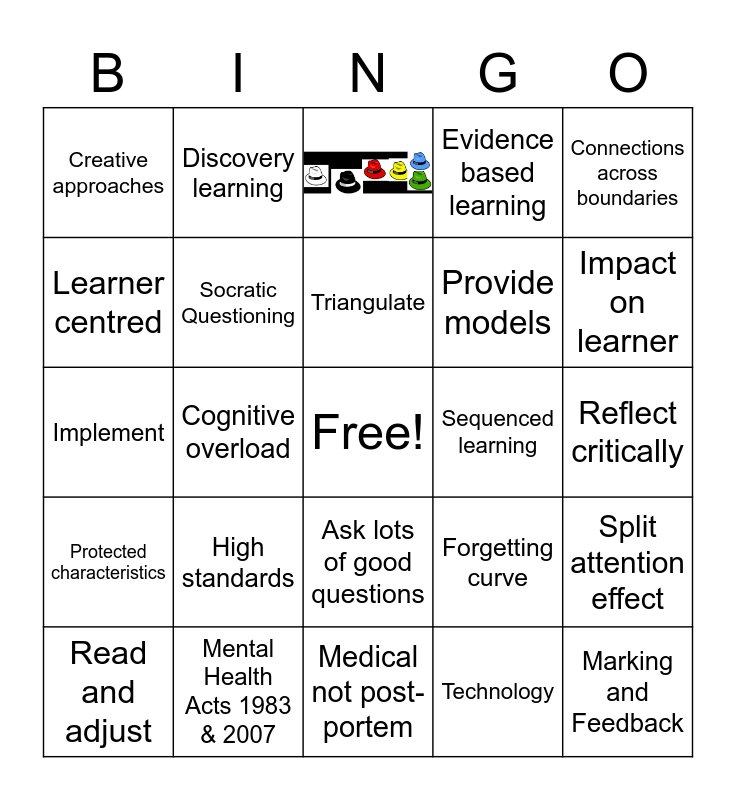
This bingo card has 9 images, a free space and 69 words: Intent, Curriculum, Deep Dive, Evidence based learning, Creative approaches, Tutor expertise, Learner centred, Learner profile, High standards, High expectations, Reflect critically, Sequenced learning, Connections across boundaries, Implement, Triangulate, Socratic Questioning, Impact on learners, Behaviour & Attitude, Future economic wellbeing, Initial assessment, Curriculum Intent, Impact on learner, Inside the black box, Medical not post-portem, Feedback culture, Read and adjust, Sequenced learning, Critical reflection, Reflective practitioners, Exit slips, Marking and Feedback, Assessment for learning, Formative assessment strategies, Formative vs Summative, Evidence for assessment, Dual coding, Discovery learning, Language, Scaffolding, Miller's magic number, Cognitive Load Theory, Split attention effect, Cognitive overload, Forgetting curve, Interleaving, Metacognition, Overlearning, De Bono's 6 hats, Begin with short review, New material in small steps, Ask lots of good questions, Provide models, Practise using new materials, Check for understanding, Obtain a high success rate, Provide scaffolding, Encourage independent practice, Weekly & monthly review, Equality Act 2010, Protected characteristics, Mental Health Acts 1983 & 2007, Care Act 2014 - adult safeguarding, Differentiation, Unconscious bias, Dual coding, Technology, Cultural Diversity, British Values and Intercultural competence.
⚠ This card has duplicate items: Sequenced learning (2), Dual coding (2)
Educational Terms | KBHS PLC Bingo Cards | SSC Term 2 SDD: HPGE | PD Bingo | CATALYST BINGO
Share this URL with your players:
For more control of your online game, create a clone of this card first.
Learn how to conduct a bingo game.
With players vying for a you'll have to call about __ items before someone wins. There's a __% chance that a lucky player would win after calling __ items.
Tip: If you want your game to last longer (on average), add more unique words/images to it.