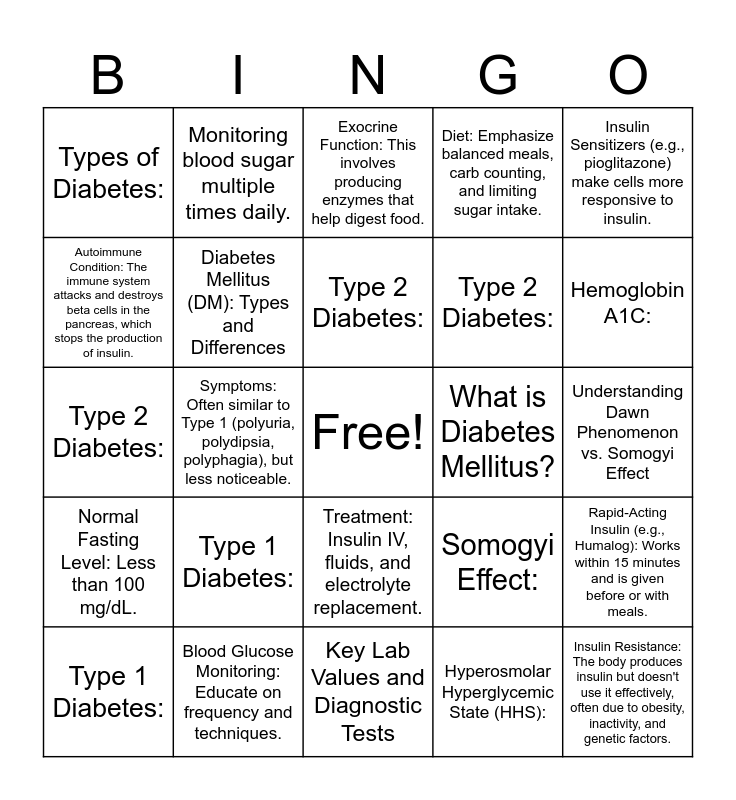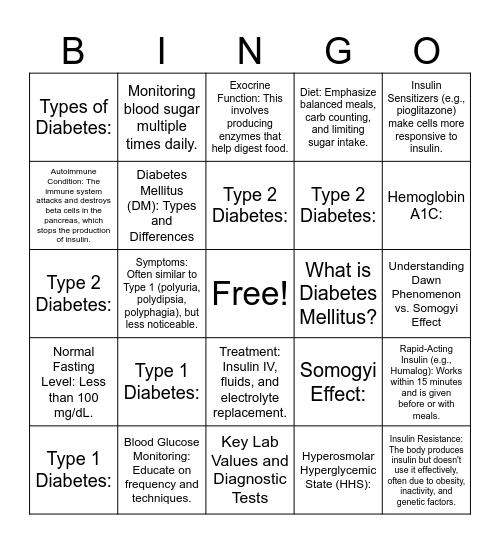
This bingo card has a free space and 85 words: Understanding Diabetes and the Pancreas' Role, Pancreas Functions:, Exocrine Function: This involves producing enzymes that help digest food., Endocrine Function: The pancreas also regulates blood sugar (glucose) levels. This happens through tiny clusters called the Islets of Langerhans, which contain two critical types of cells:, Alpha cells: These cells release glucagon when blood glucose is low. Glucagon signals the liver to convert stored glycogen back into glucose and release it into the bloodstream, raising blood sugar., Beta cells: These cells release insulin and amylin when blood glucose is high. Insulin helps cells absorb glucose for energy, while amylin slows down the absorption of glucose and controls blood sugar spikes., Liver's Role:, The liver stores glucose in the form of glycogen. When blood glucose levels drop, glucagon from the pancreas tells the liver to release stored glucose, raising blood glucose levels. When blood glucose is high, insulin encourages the liver to stor, Blood Glucose Basics:, Normal Range: Blood glucose should be between 70-110 mg/dL. The brain relies on a steady glucose supply, as it cannot store glucose, making blood glucose regulation crucial for brain function., Hypoglycemia (Low Blood Sugar): When blood glucose drops, the pancreas releases glucagon to signal the liver to release glucose., Hyperglycemia (High Blood Sugar): When blood glucose rises, the pancreas releases insulin to help cells absorb glucose and lower blood sugar levels., Diabetes Mellitus (DM): Types and Differences, What is Diabetes Mellitus?, Diabetes Mellitus is a condition where the body cannot regulate blood glucose properly, resulting in chronic hyperglycemia (high blood sugar)., Types of Diabetes:, Type 1 Diabetes:, Autoimmune Condition: The immune system attacks and destroys beta cells in the pancreas, which stops the production of insulin., Common in people under 30 and often diagnosed abruptly., Symptoms: Sudden weight loss, frequent urination (polyuria), extreme thirst (polydipsia), and increased hunger (polyphagia)., Higher risk for Diabetic Ketoacidosis (DKA), a life-threatening condition where blood becomes acidic due to a lack of insulin., Type 2 Diabetes:, Insulin Resistance: The body produces insulin but doesn't use it effectively, often due to obesity, inactivity, and genetic factors., Common onset is around age 50 and tends to develop gradually., Symptoms: Often similar to Type 1 (polyuria, polydipsia, polyphagia), but less noticeable., Higher risk for Hyperosmolar Hyperglycemic State (HHS), where blood sugar rises dangerously high without the presence of ketones (no acidosis)., Diabetes Risk Factors, Type 1: Family history, genetic predisposition, autoimmune conditions, and sometimes following viral infections. It’s more common in those under 30., Type 2: Obesity (high BMI), sedentary lifestyle, family history, certain ethnicities (Hispanic, African American, Native American, Asian American, Pacific Islander), and history of gestational diabetes. Symptoms usually develop gradually., Signs and Symptoms, Type 1 Diabetes:, Quick onset of symptoms, including weight loss, increased appetite, and the "3 Ps" (polyuria, polydipsia, polyphagia)., Higher risk for DKA due to the complete lack of insulin., Type 2 Diabetes:, Gradual onset, with symptoms often less noticeable., Weight gain is common, and HHS is a risk due to high blood glucose without ketones., Key Lab Values and Diagnostic Tests, Blood Glucose:, Normal Fasting Level: Less than 100 mg/dL., Hemoglobin A1C:, Reflects average blood glucose levels over the past 3 months. A normal A1C is between 4-6%., Glucose Tolerance Test:, Should be below 140 mg/dL after 2 hours of consuming glucose., Urine Screening:, Checks for glucose and ketones in the urine, as elevated levels may indicate diabetes or uncontrolled blood glucose., Therapeutic Management and Nursing Interventions, Type 1 Diabetes:, Insulin is essential. Treatment involves:, Regular insulin injections or an insulin pump., Diet control through carbohydrate counting., Monitoring blood sugar multiple times daily., Type 2 Diabetes:, Focus on lifestyle changes first:, Diet, exercise, and potentially oral medications that help lower blood glucose., Some patients may eventually need insulin., Nursing Interventions:, Blood Glucose Monitoring: Educate on frequency and techniques., Diet: Emphasize balanced meals, carb counting, and limiting sugar intake., Exercise: Can lower blood glucose but requires careful planning to avoid hypoglycemia., Foot Care: Inspect feet daily for cuts, blisters, or infections; wear proper footwear; avoid barefoot walking., Sick Day Rules: Maintain blood sugar checks, even if not eating much, as stress and illness can increase blood sugar., Medication Types and Insulin Administration, Oral Hypoglycemics for Type 2:, Insulin stimulators (e.g., glipizide) help the pancreas release more insulin., Biguanides (e.g., metformin) decrease glucose production in the liver., Insulin Sensitizers (e.g., pioglitazone) make cells more responsive to insulin., Types of Insulin:, Rapid-Acting Insulin (e.g., Humalog): Works within 15 minutes and is given before or with meals., Short-Acting Insulin (e.g., Regular insulin): Takes 30-60 minutes to work and is used for meal coverage and DKA emergencies., Intermediate-Acting Insulin (e.g., NPH): Takes 1-2 hours to start working; used to cover blood sugar between meals., Long-Acting Insulin (e.g., Lantus): Works slowly without peaks, providing steady insulin levels over 12-24 hours., Complications of Diabetes, Diabetic Ketoacidosis (DKA):, Cause: High blood glucose with ketone production (due to lack of insulin)., Symptoms: Rapid breathing (Kussmaul), fruity breath, nausea, dehydration., Treatment: Insulin IV, fluids, and electrolyte replacement., Hyperosmolar Hyperglycemic State (HHS):, Cause: Extremely high blood glucose with dehydration, typically in Type 2., Symptoms: Extreme thirst, confusion, dry mouth, no ketones., Treatment: Insulin IV, fluids, and monitoring electrolytes., Understanding Dawn Phenomenon vs. Somogyi Effect, Dawn Phenomenon:, Blood sugar rises in the early morning due to hormone release. Managed by adjusting insulin timing., Somogyi Effect: and Blood sugar drops during the night (often due to excess insulin before bed), and the body compensates by raising blood glucose, resulting in high morning glucose. Managed by adjusting insulin dosage or adding a bedtime snack..
⚠ This card has duplicate items: Type 1 Diabetes: (3), Type 2 Diabetes: (3)
Diabetes Bingo | Type 1 Diabetes | Type 1 Diabetes | Diabetes Type 1 Bingo | DiaBingo
Share this URL with your players:
For more control of your online game, create a clone of this card first.
Learn how to conduct a bingo game.
With players vying for a you'll have to call about __ items before someone wins. There's a __% chance that a lucky player would win after calling __ items.
Tip: If you want your game to last longer (on average), add more unique words/images to it.