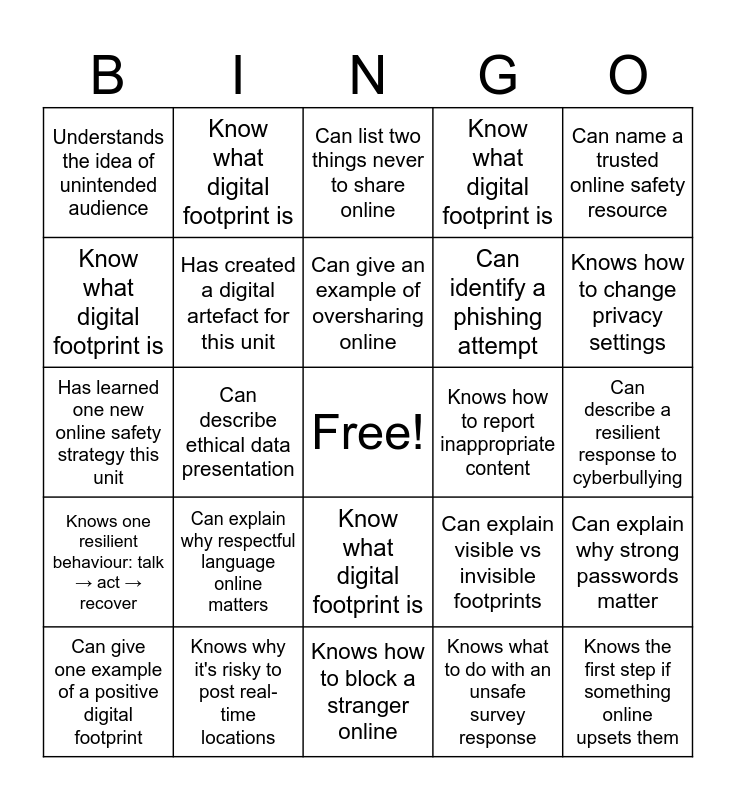
This bingo card has a free space and 29 words: Know what digital footprint is, Knows why it's risky to post real-time locations, Can list two things never to share online, Can explain why anonymity matters in surveys, Can name a trusted online safety resource, Understands the idea of unintended audience, Has created a digital artefact for this unit, Can give an example of oversharing online, Knows how to report inappropriate content, Can explain why strong passwords matter, Can give one example of a positive digital footprint, Can describe ethical data presentation, Knows what to do with an unsafe survey response, Knows the first step if something online upsets them, Has learned one new online safety strategy this unit, Can give a pledge to improve online behaviour, Knows how to block a stranger online, Can explain visible vs invisible footprints, Knows how to change privacy settings, Knows one resilient behaviour: talk → act → recover, Can explain why respectful language online matters, Took part in the Online Safety Questionnaire project, Can identify a phishing attempt, Can describe a resilient response to cyberbullying, Know what digital footprint is, Know what digital footprint is, Know what digital footprint is, Know what digital footprint is and Know what digital footprint is.
⚠ This card has duplicate items: Know what digital footprint is (6)
What I know about Digital Literacy | worc | digital literacy | Digital Literacy Bingo | Find someone who...
Share this URL with your players:
For more control of your online game, create a clone of this card first.
Learn how to conduct a bingo game.
With players vying for a you'll have to call about __ items before someone wins. There's a __% chance that a lucky player would win after calling __ items.
Tip: If you want your game to last longer (on average), add more unique words/images to it.